

In recent years, there has been a significant advancement in the field of Artificial Intelligence (AI) and Augmented Reality (AR). These technologies have become increasingly popular and have the potential to enhance virtual experiences in various fields such as gaming, education, healthcare, and...
A Digital Appraiser Determines the Market Value of an Apartment in One Minute
182
25.06.2026
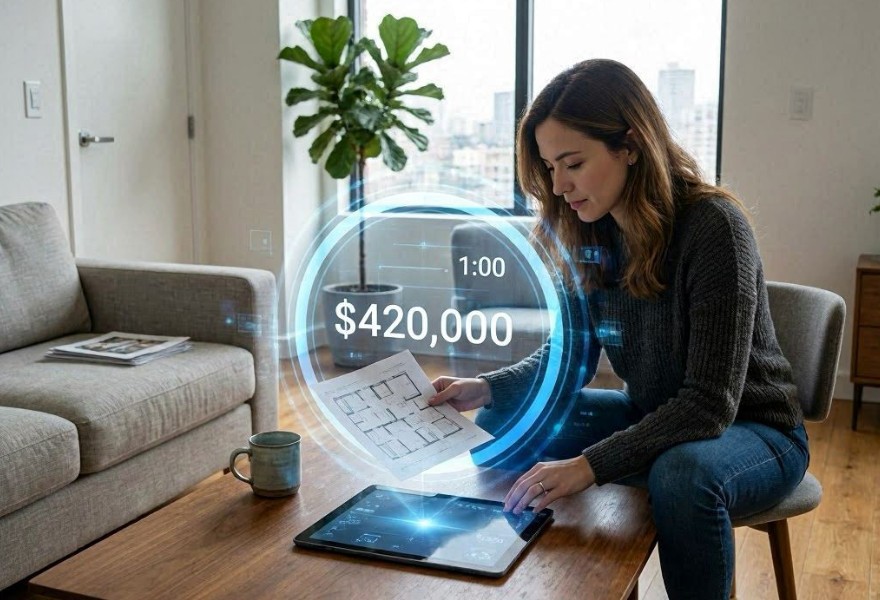
For decades, determining the market value of an apartment was a slow, expensive, and often subjective process. Homeowners seeking to sell or refinance their property had to wait days, or even weeks, for a professional appraiser to visit the site, inspect the premises, and compile a comprehensive report. This delay often created a bottleneck in the real estate market, leaving sellers and buyers in a state of uncertainty while they waited for the “official” price tag. The traditional appraisal model, while thorough, struggled to keep pace with the hyper-speed demands of the 21st-century digital economy.
Today, the real estate landscape is being transformed by digital appraisal platforms. By leveraging artificial intelligence, big data, and machine learning, these applications can now provide a highly accurate market valuation of an apartment in sixty seconds or less. This transition from manual assessment to algorithmic precision is fundamentally changing how we buy, sell, and invest in real estate.
The Engine Behind the Digital Appraiser
The magic of the one-minute appraisal lies in the massive aggregation of data. A digital appraiser is essentially a sophisticated predictive engine that processes thousands of variables simultaneously to calculate a property’s worth.
Data Aggregation and Real-Time Market Monitoring
Unlike a human appraiser who might rely on a handful of recent sales in a neighborhood, a digital platform accesses nationwide databases. It integrates:
- Historical Sales Data: Records of every transaction in the local area over the past several years.
- Current Listings: Active competition in the neighborhood, providing a view of current buyer interest.
- Tax Records and Municipal Data: Official property details, including square footage, lot size, and year of construction.
Machine Learning and Predictive Modeling
The core of the digital appraiser is a machine learning model trained to weigh these variables differently based on local market trends. The algorithm understands, for instance, that in a specific metropolitan neighborhood, a balcony might increase property value by 5%, while in another area, that same feature might have zero impact. It learns these correlations by analyzing millions of past transactions, constantly updating its internal logic to reflect current economic shifts, interest rate changes, and seasonal buyer behavior.
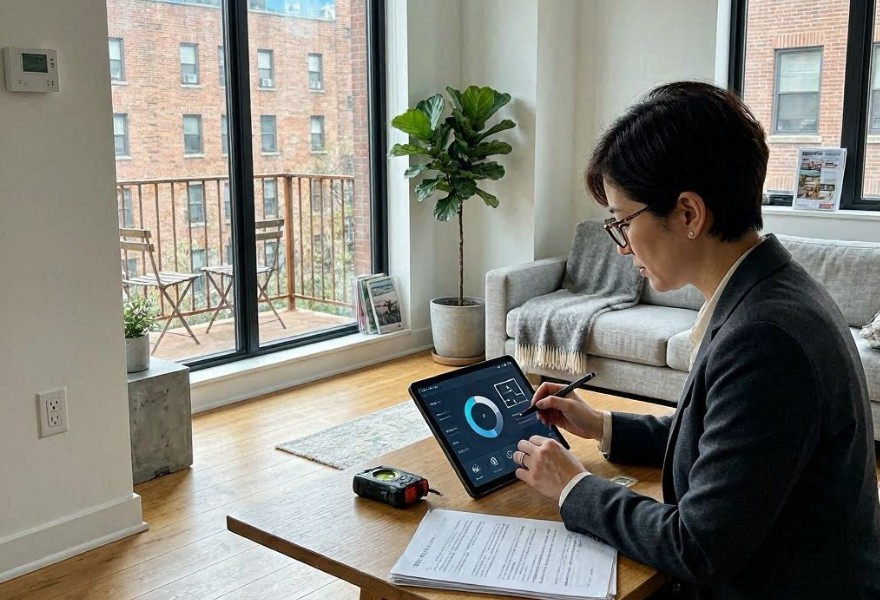
Enhancing Accuracy with Image Analysis
One of the most impressive features of modern digital appraisal apps is the inclusion of computer vision. By allowing users to upload photos or videos of the apartment, the app’s AI can conduct a “visual audit.” It can identify:
- Interior Condition: Whether the apartment has been renovated or if it requires significant repairs.
- Finish Quality: The difference between standard materials and luxury upgrades like marble countertops or hardwood flooring.
- Natural Light and View: Using satellite and street-view data to verify how much natural light the windows receive, which is a major factor in urban property pricing.
The Benefits for the Real Estate Ecosystem
The shift to instantaneous valuation offers clear advantages for all participants in the property market.
Speed and Financial Fluidity
For sellers, the ability to know their home's value in a minute allows for immediate decision-making. If they see that the market is peaking, they can list their property within the hour. For mortgage lenders, digital appraisals allow for faster loan processing, reducing the time from mortgage application to closing, which is a significant competitive advantage in a fast-moving market.
Neutrality and Reduced Subjectivity
Human appraisers, despite their professionalism, are susceptible to subconscious bias. A digital appraiser, conversely, is purely quantitative. It does not have an opinion; it only has data. This provides a level of consistency that is highly attractive to banks and institutional investors, who value stability and standardized risk assessment protocols.
Challenges and the Human Role
While digital appraisers are powerful, they are not intended to replace the human element entirely. They function best as a high-speed, high-accuracy baseline. They may struggle with highly unique properties—such as historic homes with artisanal features or luxury apartments with bespoke, non-standard architectural designs—that simply don't fit into the typical dataset. In these cases, a human appraiser is still essential for providing the final qualitative assessment.
Conclusion
The digital appraiser is a testament to the power of big data. By reducing the valuation process from weeks to seconds, we have significantly lowered the friction in the real estate market, creating a more transparent and fluid environment for everyone involved. As AI models become more adept at processing unstructured data, such as high-definition videos and interior scans, the precision of these instant valuations will only continue to grow, solidifying their role as an indispensable tool in modern property management.