

In recent years, there has been a significant advancement in the field of Artificial Intelligence (AI) and Augmented Reality (AR). These technologies have become increasingly popular and have the potential to enhance virtual experiences in various fields such as gaming, education, healthcare, and...
A Digital Numismatist Appraises Coins from a Photograph in Seconds
6
16.08.2026
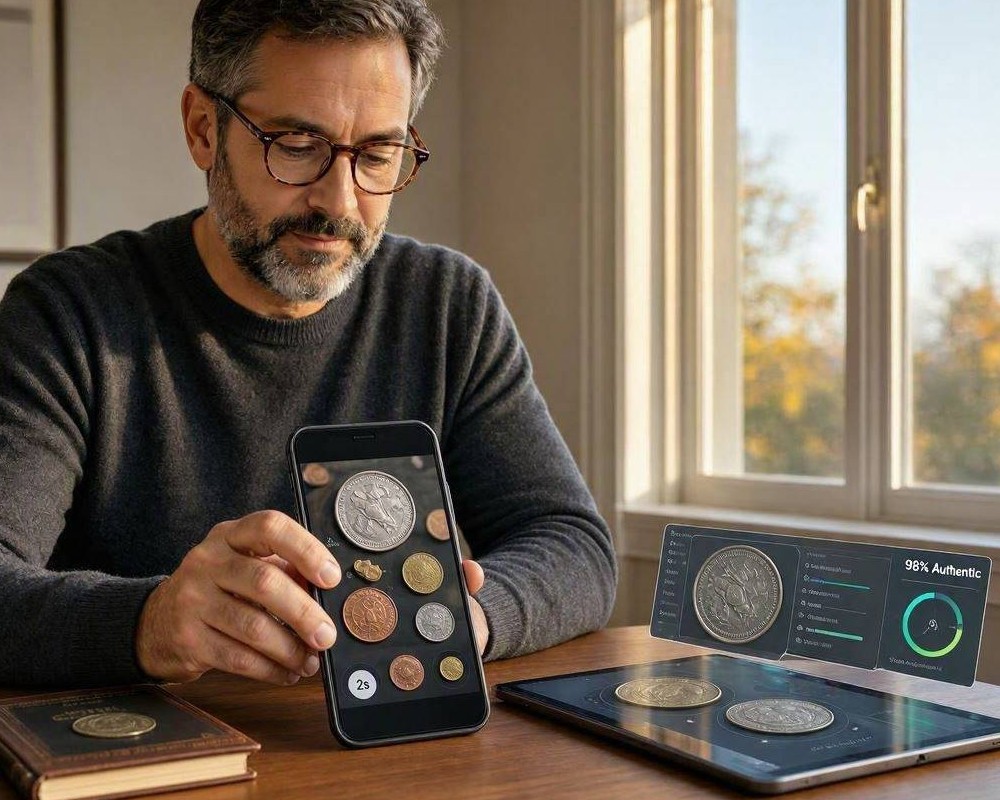
An unfamiliar coin can raise immediate questions: Where was it minted? How old is it? Is it rare, or merely unusual? A digital numismatist app can provide preliminary answers within seconds. By analyzing a photograph, the software compares visible details with extensive coin databases, identifies likely matches, and estimates the item’s current market value.
This technology makes coin research faster and more accessible, but it does not eliminate the need for careful inspection. Understanding how photo-based appraisal works helps collectors use the results effectively and avoid unrealistic expectations.
How Photo Coin Identification Works
A digital numismatist uses computer vision and machine-learning models trained on images of coins from different countries, periods, denominations, and mints. After a user uploads photographs of the obverse and reverse, the system examines the coin’s design, lettering, date, portrait, symbols, shape, and edge characteristics.
Image Recognition and Database Matching
The app converts visual elements into searchable data and compares them with reference images. It may distinguish between coins that appear almost identical by locating details such as a mint mark, altered legend, portrait variation, or differences in the spacing of numerals.
Once a likely match is found, the application can display useful information, including:
- country or issuing authority;
- denomination and currency;
- estimated production date;
- metal composition, weight, and diameter;
- mint location and reported mintage;
- known varieties and potential errors.
Automated Value Estimation
Identification is only the first stage. To calculate an estimated value, the app may review auction results, dealer listings, catalog prices, and recorded sales for comparable examples. Some platforms also ask the user to select a condition grade or attempt to assess visible wear automatically.
The resulting figure should be treated as a price range rather than a guaranteed offer. Coin values change according to demand, location, metal prices, authenticity, preservation, and the quality of the strike.
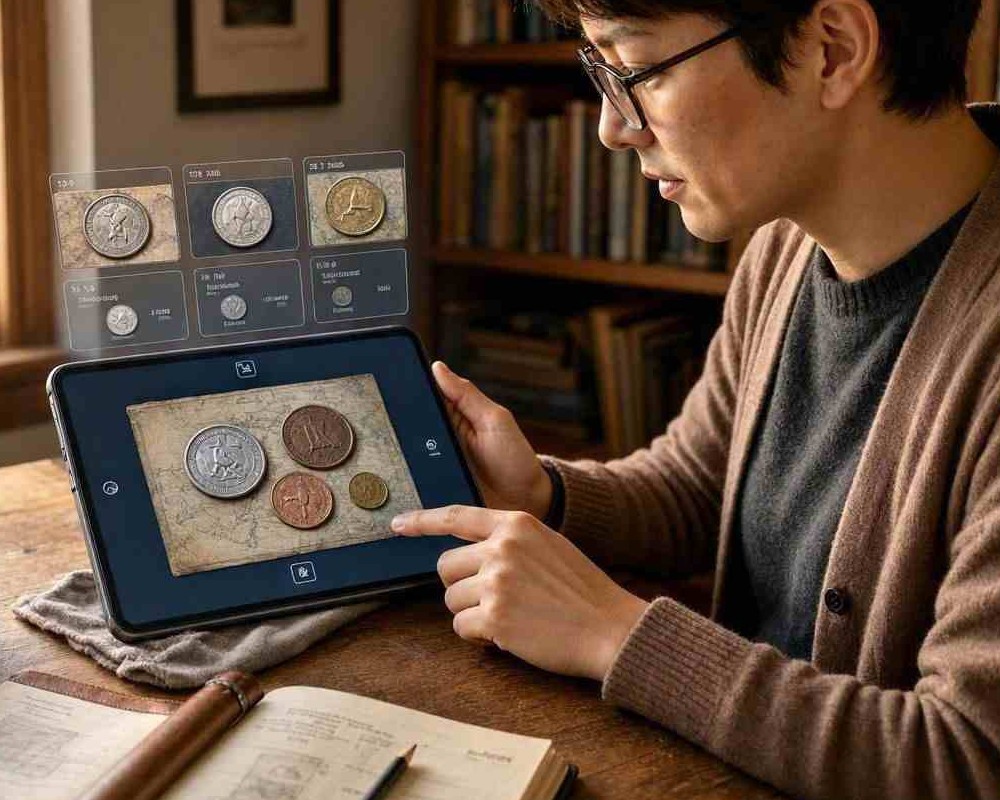
How to Take a Photograph for an Accurate Appraisal
Even sophisticated recognition software cannot recover details hidden by blur, glare, or shadow. A clear image significantly improves both identification and valuation.
- Place the coin on a plain, contrasting background.
- Use bright, diffused lighting instead of a direct flash.
- Hold the camera parallel to the coin to prevent distortion.
- Fill most of the frame while keeping the entire rim visible.
- Photograph both sides and, when relevant, the edge.
- Do not clean the coin before taking pictures.
Cleaning can leave scratches, remove original toning, and reduce collector value. If dirt obscures a feature, consult a conservation specialist rather than using household chemicals or abrasive materials.
What a Digital Appraisal Can and Cannot Confirm
Useful Results in Seconds
Photo appraisal is especially valuable for sorting inherited collections, identifying foreign change, creating a digital inventory, and deciding which coins deserve professional examination. It can quickly separate common circulation pieces from items associated with scarce dates, low mintages, precious metals, or collectible varieties.
Limits of Photograph-Based Analysis
A photograph cannot reliably reveal every sign of counterfeiting, tooling, repair, altered surfaces, or incorrect metal composition. It also may not detect subtle die varieties when essential details are worn or poorly lit. Accurate grading remains difficult because small differences in luster, contact marks, and eye appeal can produce large price differences.
For a potentially valuable coin, verify the app’s result with weight and diameter measurements, reputable catalogs, recent completed auction sales, and an experienced dealer or independent grading service.
Turning Fast Recognition into Better Collecting Decisions
A digital numismatist is best viewed as a rapid research assistant. It reduces hours of manual catalog searching to a few seconds and gives beginners a practical starting point. Collectors should save identification details, record provenance, compare multiple sales, and seek expert authentication before selling, insuring, or purchasing an expensive coin.
Used responsibly, photo-based appraisal combines speed with informed judgment. The app provides the first clue; careful verification determines the coin’s real numismatic significance and market value.