
In recent years, there has been a significant advancement in the field of Artificial Intelligence (AI) and Augmented Reality (AR). These technologies have become increasingly popular and have the potential to enhance virtual experiences in various fields such as gaming, education, healthcare, and...
A Neural Network Monitors Rail Wear and Predicts When Replacement Is Needed
13
24.09.2026
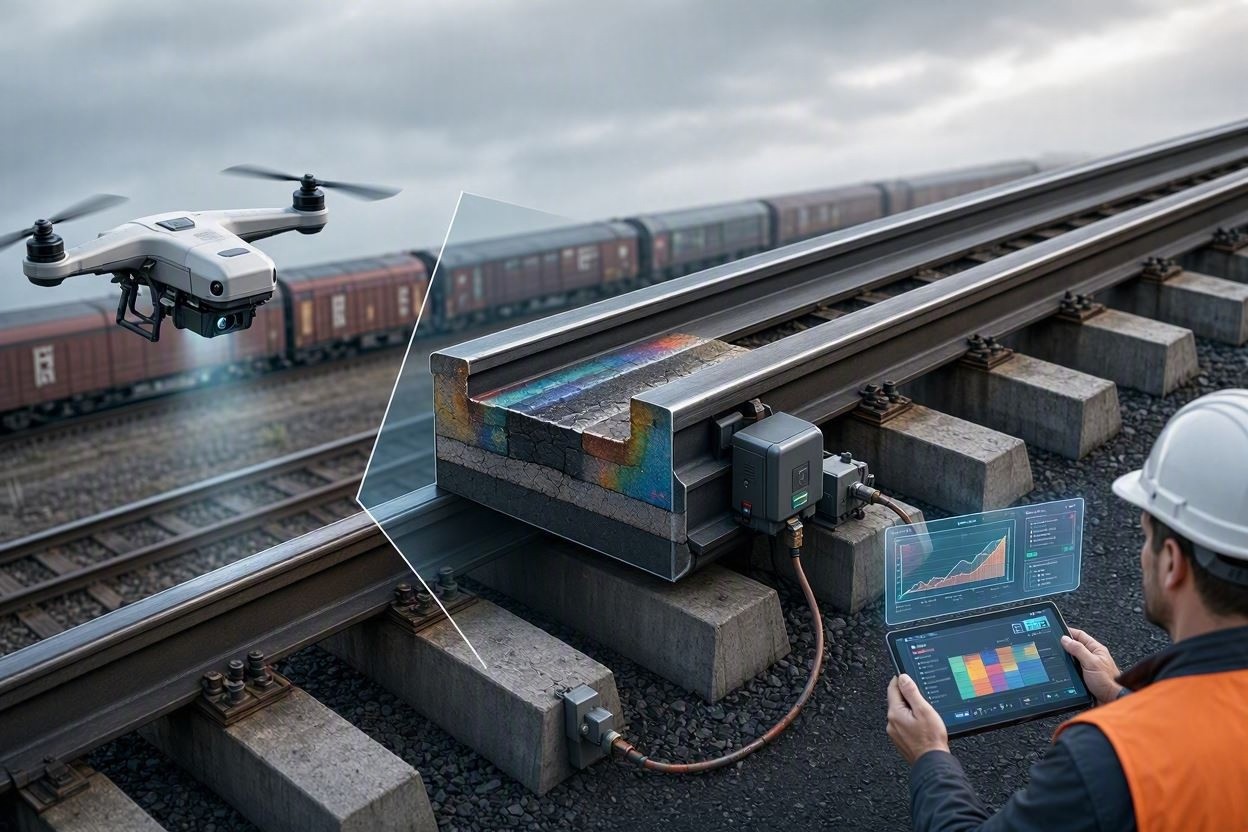
Rail infrastructure is exposed to millions of wheel passages, changing weather, vibration, braking forces, and heavy freight loads. Over time, these factors cause head wear, side wear, corrugation, cracks, squats, shelling, and other defects that can reduce ride quality and compromise safety. Traditional inspection methods remain essential, but they are often periodic, labor-intensive, and dependent on specialist interpretation. A neural network can strengthen this process by continuously analyzing rail condition data and predicting when replacement or corrective maintenance should be scheduled.
Why Rail Wear Prediction Matters
Replacing rails too early wastes capital and disrupts operations. Replacing them too late increases the risk of service restrictions, emergency repairs, and incidents. The goal is not simply to identify visible damage, but to understand how fast degradation is progressing and how much useful life remains under specific traffic conditions.
Predictive rail maintenance helps infrastructure managers move from calendar-based inspections to condition-based decisions. Instead of asking whether a section of track is old enough to replace, engineers can ask whether the measured wear pattern, defect growth rate, axle load history, and environmental exposure indicate that replacement is necessary within a defined time window.
How a Neural Network Monitors Rail Wear
Data Collection from Multiple Sources
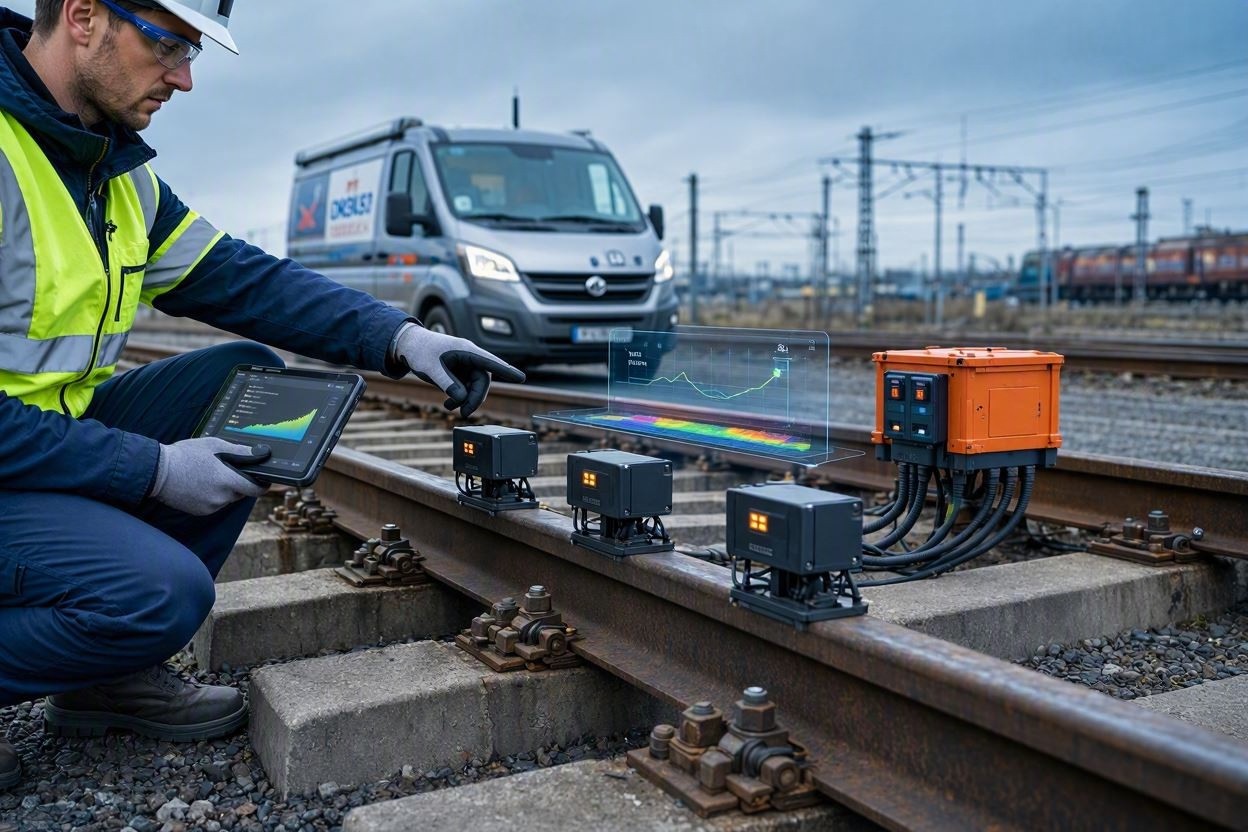
A modern rail monitoring system can combine several types of data. Track geometry cars measure alignment, gauge, profile, and vertical irregularities. Ultrasonic testing identifies internal flaws. Laser scanners create precise rail head profiles. Wayside sensors record wheel impacts and dynamic loads. Cameras mounted on inspection vehicles capture surface defects, fastener condition, and ballast issues.
The neural network learns from these inputs by comparing current measurements with historical wear patterns and verified maintenance outcomes. When trained properly, it can detect subtle combinations of signals that may be difficult to recognize manually, especially across thousands of kilometers of track.
Feature Recognition and Anomaly Detection
Computer vision models can locate surface cracks, spalling, corrugation, burns, and plastic deformation in images. Time-series models can evaluate how measured wear changes from one inspection to the next. Graph-based or spatial models can consider the relationship between neighboring track segments, curves, switches, gradients, and zones with repeated braking or acceleration.
The system does not need to replace engineers. Its value lies in prioritization. It can highlight segments where wear is accelerating, identify sections that differ from expected behavior, and recommend closer inspection before a defect becomes critical.
Predicting the Right Replacement Window
Estimating Remaining Useful Life
The most valuable output of the neural network is an estimate of remaining useful life. This estimate is based on current rail profile, defect severity, traffic density, axle loads, curvature, rail material, grinding history, lubrication records, and weather exposure. The model can assign a probability that a rail section will exceed safe wear thresholds within three, six, or twelve months.
Such forecasts allow maintenance teams to coordinate replacement with planned possessions, material availability, crew schedules, and service timetables. This reduces emergency closures and supports more reliable budgeting.
Risk-Based Maintenance Planning
Not every defect has the same operational importance. A minor flaw on a lightly used siding may be less urgent than moderate wear on a high-speed main line or a heavily loaded freight curve. Neural networks can support risk-based maintenance by combining defect severity with operational context.
- High-risk segments can be scheduled for immediate verification or replacement.
- Medium-risk segments can be monitored more frequently or treated with grinding.
- Low-risk segments can remain in service until the next planned inspection cycle.
Benefits for Rail Operators
AI-supported rail wear monitoring improves safety by detecting early signs of deterioration and reducing dependence on delayed manual reporting. It also improves asset management because replacement decisions are supported by data rather than broad assumptions. Operators can extend the life of healthy rails, focus spending on vulnerable sections, and reduce unplanned downtime.
Another advantage is consistency. Human inspectors may vary in judgment, especially when defects are borderline or visibility is poor. A trained model applies the same evaluation logic across the network, while still allowing engineers to review, validate, and override recommendations.
Challenges and Practical Considerations
Data Quality and Model Training
A neural network is only as reliable as the data used to train it. Incomplete inspection records, inconsistent labeling, sensor calibration errors, and missing maintenance history can reduce accuracy. Railways must establish clear defect definitions, maintain sensor quality, and continuously compare model predictions with field results.
Integration with Engineering Judgment
AI predictions should be embedded into existing maintenance workflows, not treated as isolated outputs. Engineers need transparent dashboards showing defect evidence, confidence levels, historical trends, and recommended actions. The best systems combine machine learning efficiency with domain expertise and regulatory requirements.
The Future of Intelligent Track Maintenance
As inspection vehicles, onboard sensors, and digital maintenance platforms become more connected, neural networks will play a larger role in railway asset management. The future is a continuously updated digital view of track health, where each rail segment has a condition score, a degradation forecast, and a recommended intervention plan.
By monitoring rail wear and predicting replacement needs, neural networks help rail operators improve safety, reduce costs, and plan maintenance with greater precision. The technology does not eliminate the need for skilled engineers; it gives them sharper tools to make timely, evidence-based decisions.