
In recent years, there has been a significant advancement in the field of Artificial Intelligence (AI) and Augmented Reality (AR). These technologies have become increasingly popular and have the potential to enhance virtual experiences in various fields such as gaming, education, healthcare, and...
A Neural Network Predicts Grape Harvest Quality from Leaf Color in June
30
13.11.2026
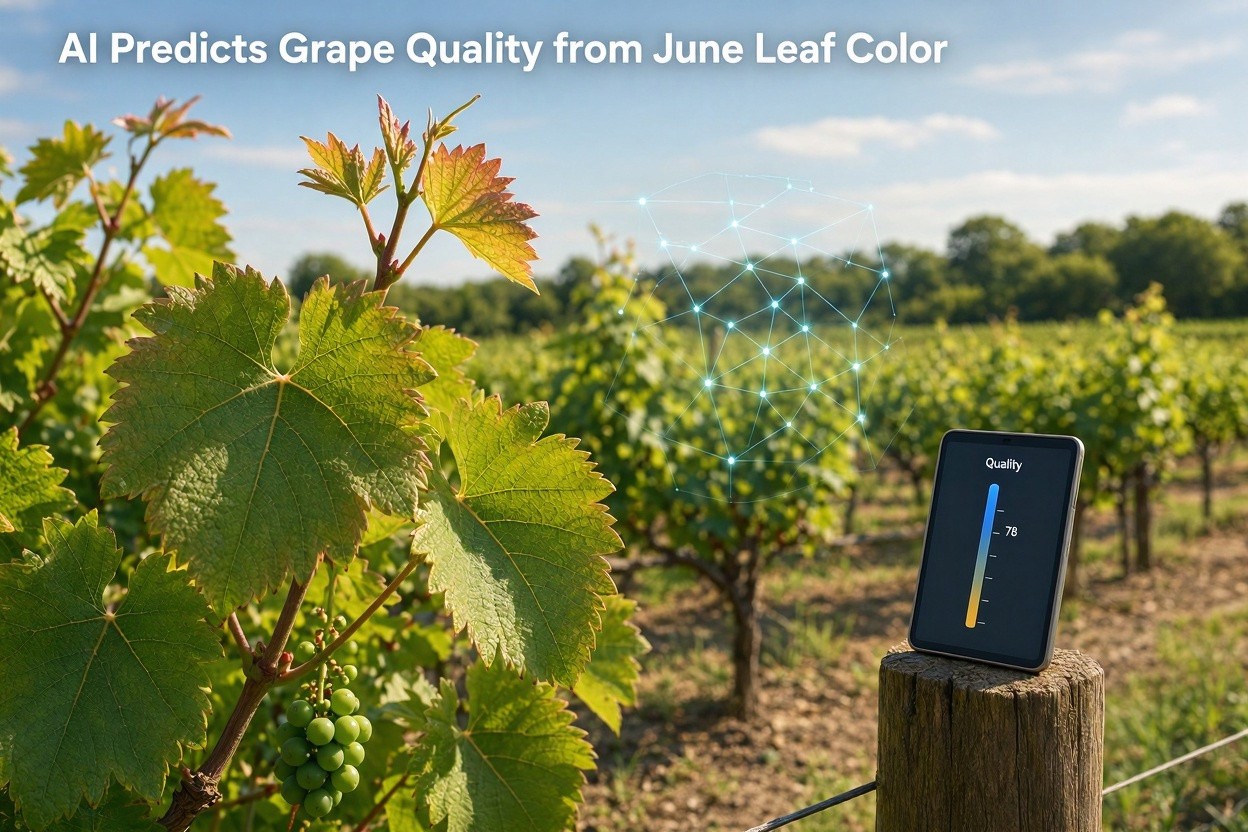
In viticulture, June is a critical month. Vines have developed enough canopy to reveal their nutritional and water status, yet the fruit is still weeks away from ripening. A neural network that analyzes grape leaf color in June can give growers an early indication of future harvest quality, including potential sugar accumulation, acidity balance, berry uniformity, and disease risk.
This approach is not about replacing agronomists or winemakers. It is about turning visible plant signals into measurable, timely forecasts. Leaf color reflects chlorophyll concentration, nutrient availability, stress response, and canopy vigor. When these visual indicators are interpreted by machine learning models trained on vineyard data, they can help predict how the crop is likely to perform at harvest.
Why June Leaf Color Matters
Leaf color is one of the earliest signs of vine condition. Healthy grape leaves usually show a stable green tone, but subtle shifts toward pale green, yellow, red, or uneven mottling can indicate stress long before yield or fruit chemistry changes are obvious. In June, these signals are especially valuable because growers still have time to intervene.
Key biological signals in leaf color
A neural network can detect patterns that are difficult to quantify by eye. It may associate certain shades and distributions of color with nitrogen deficiency, magnesium imbalance, water stress, excessive vigor, or early symptoms of disease. These factors influence berry development and can affect the final quality of the grape harvest.
- Pale leaves may suggest limited nitrogen or root-zone stress.
- Yellowing between veins can point to mineral imbalance.
- Reddish tones may be linked to stress or varietal-specific responses.
- Uneven leaf color across blocks can indicate irrigation or soil variability.
How the Neural Network Works
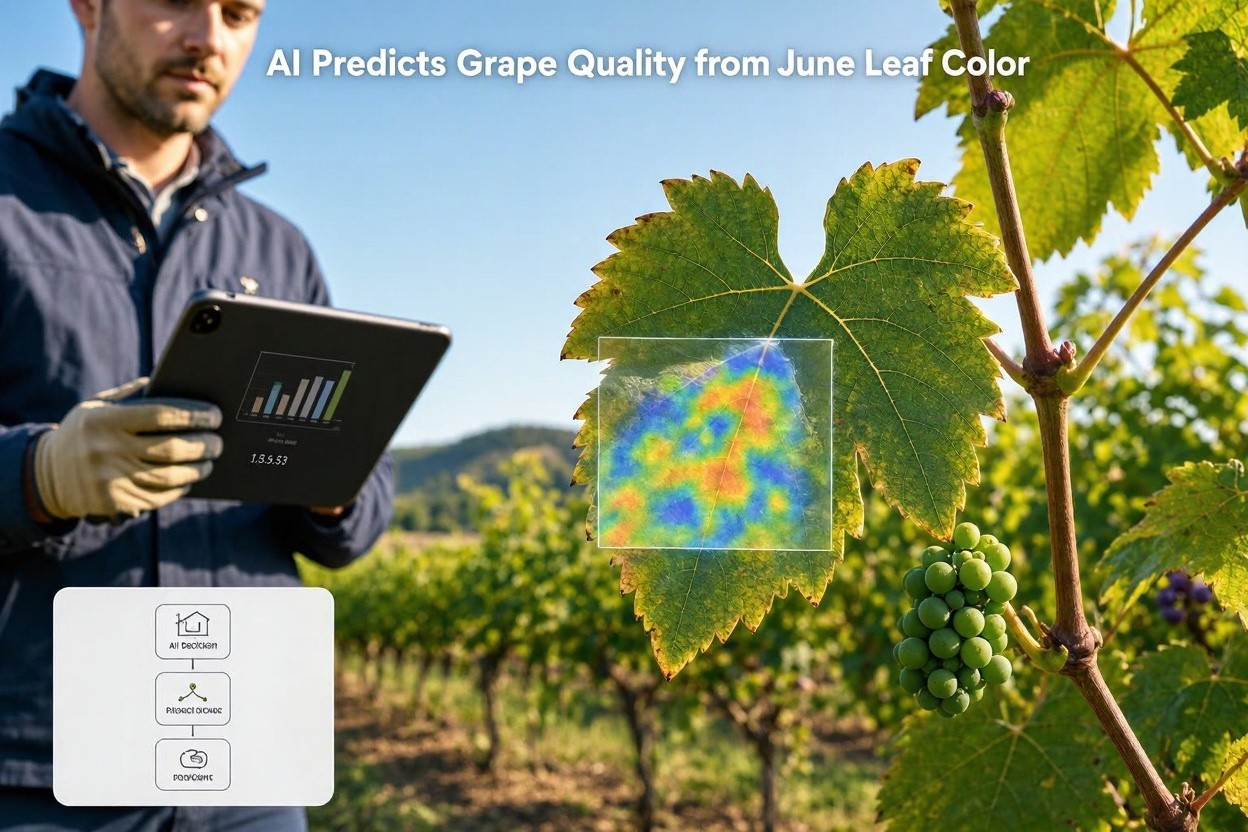
The system typically begins with image collection. Vineyard teams use smartphones, tractor-mounted cameras, drones, or fixed sensors to capture images of vine leaves under controlled or standardized lighting conditions. Each image is connected to its location, grape variety, vineyard block, date, weather records, soil data, and later harvest results.
From image to prediction
During training, the neural network compares June leaf images with actual harvest outcomes. These outcomes may include Brix levels, titratable acidity, pH, berry weight, phenolic maturity, bunch uniformity, disease incidence, and winery quality ratings. Over many seasons and vineyard blocks, the model learns which visual patterns are most strongly associated with high-quality or low-quality harvests.
Convolutional neural networks are commonly used because they are effective at recognizing shapes, textures, and color gradients in images. More advanced systems may combine image analysis with climate models and remote sensing data. This multi-source approach improves accuracy because leaf color alone is informative, but not complete.
Practical Benefits for Vineyards
Early prediction gives vineyard managers a planning advantage. If the model signals that a block is likely to produce lower-quality fruit, the grower can investigate the cause and act before veraison. Adjustments may include irrigation scheduling, foliar nutrition, canopy thinning, pest monitoring, or targeted soil analysis.
Decisions supported by early forecasting
- Prioritizing vineyard blocks for scouting and laboratory testing.
- Fine-tuning irrigation to reduce water stress or excessive growth.
- Applying nutrients only where visual and model data justify treatment.
- Estimating harvest logistics earlier in the season.
- Separating fruit lots by predicted quality for winemaking strategy.
For premium wine producers, this can be especially valuable. Small differences in fruit maturity and vine balance can influence aroma development, tannin structure, and aging potential. A reliable June forecast helps align vineyard operations with the intended wine style.
Accuracy, Limitations, and Data Quality
The accuracy of a neural network depends heavily on the quality and diversity of training data. A model trained in one region may not immediately perform well in another because soil, climate, grape variety, rootstock, trellis system, and disease pressure all affect leaf appearance. Local calibration is essential.
Common sources of error
Lighting conditions can distort color. Shadows, dust, camera settings, and leaf age may also mislead the system. To reduce these risks, vineyards should follow consistent image-capture protocols and combine image predictions with field observations. The best results come when artificial intelligence supports expert judgment rather than operating as a black box.
Another limitation is that harvest quality is influenced by events after June. Heat waves, hail, late disease outbreaks, or unusual rainfall can change the season’s outcome. Therefore, the neural network’s prediction should be updated as new data becomes available.
The Future of AI in Grape Quality Forecasting
Neural networks that predict grape harvest quality from June leaf color represent a practical step toward precision viticulture. As datasets grow and models become more region-specific, growers will gain earlier, more accurate insight into vine performance. The technology can reduce unnecessary inputs, improve fruit selection, and support more resilient vineyard management.
The most successful systems will combine computer vision, agronomy, weather analytics, and winemaking expertise. Leaf color in June is not a complete harvest forecast by itself, but it is a powerful early signal. When interpreted correctly, it can help vineyards move from reactive management to proactive quality control.