
In recent years, there has been a significant advancement in the field of Artificial Intelligence (AI) and Augmented Reality (AR). These technologies have become increasingly popular and have the potential to enhance virtual experiences in various fields such as gaming, education, healthcare, and...
A Neural Network Predicts the Likelihood of Cancer Recurrence in Patients
53
17.09.2026
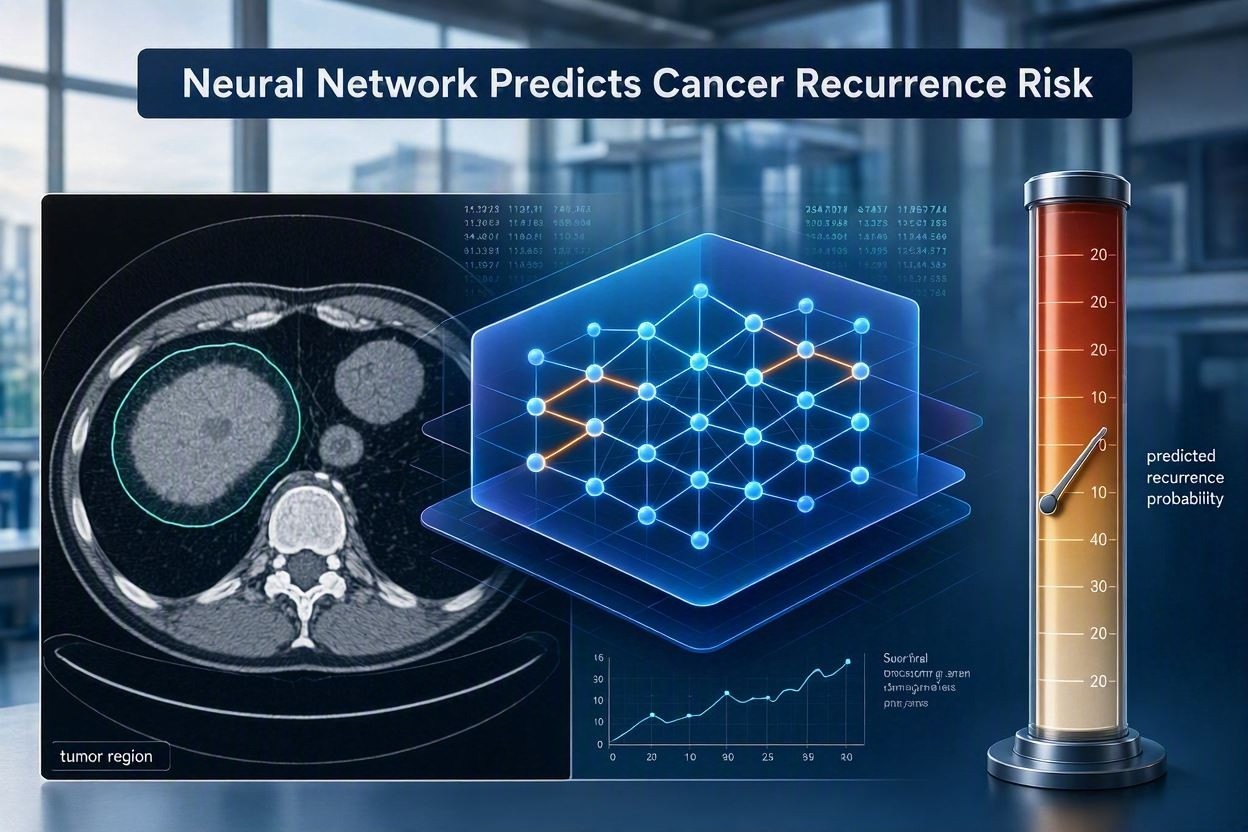
Cancer recurrence remains one of the most difficult challenges in oncology. Even after successful surgery, chemotherapy, radiation, or targeted therapy, some patients face the return of the disease months or years later. Predicting who is at higher risk has traditionally depended on tumor stage, grade, lymph node involvement, genetic markers, and a physician’s clinical judgment. Today, neural networks are adding a new layer of precision by analyzing complex medical data and estimating the likelihood that cancer may return.
Why Recurrence Prediction Matters
Accurate recurrence prediction can influence nearly every stage of cancer care. A patient with a high predicted risk may benefit from closer monitoring, additional imaging, extended medication, or enrollment in a clinical trial. A patient with a low predicted risk may avoid unnecessary procedures and the anxiety associated with excessive testing. The goal is not to replace oncologists, but to give them better tools for tailoring care to each individual.
Moving Beyond Traditional Risk Factors
Traditional risk assessment often relies on a limited number of clinical indicators. While these factors are valuable, they may not capture subtle patterns hidden in pathology images, blood test results, genomic profiles, radiology scans, and treatment history. Neural networks can process these diverse data sources together and identify relationships that are difficult for humans to detect manually.
How Neural Networks Analyze Cancer Data
A neural network is a type of artificial intelligence model designed to recognize patterns. In cancer recurrence prediction, it is trained on large datasets from previous patients. These datasets may include information about tumor biology, imaging features, surgical margins, molecular mutations, therapy response, lifestyle factors, and follow-up outcomes.
During training, the model compares patient characteristics with known outcomes. It learns which combinations of features are associated with recurrence and which are linked to long-term remission. Once validated, the neural network can evaluate a new patient’s data and generate a risk estimate that supports clinical decision-making.
Examples of Data Used by the Model
- Histopathology slides showing tumor structure and cell appearance
- MRI, CT, PET, or mammography imaging findings
- Genomic and molecular test results
- Blood biomarkers and inflammatory indicators
- Treatment type, duration, and response
- Patient age, medical history, and comorbidities
Potential Benefits for Patients and Clinicians
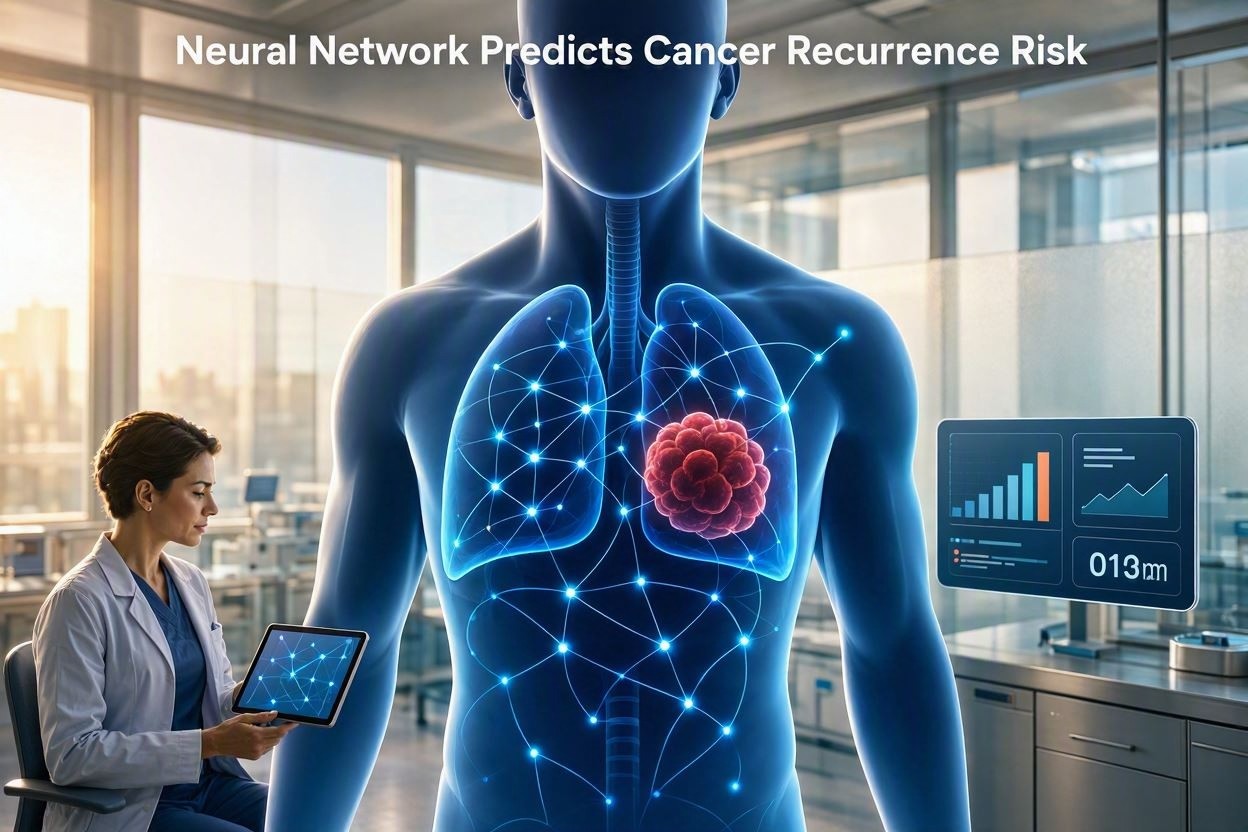
The most important benefit of a recurrence prediction model is personalization. Oncology is increasingly moving away from one-size-fits-all treatment plans. By estimating individual risk more accurately, neural networks may help clinicians decide how intensive post-treatment surveillance should be and whether additional therapies are justified.
More Targeted Follow-Up
Follow-up schedules can be adjusted according to risk. High-risk patients may receive more frequent examinations, imaging, or laboratory testing. Lower-risk patients may follow a less intensive plan, reducing exposure to radiation, lowering healthcare costs, and minimizing emotional stress.
Support for Treatment Decisions
In some cases, recurrence prediction may help guide adjuvant therapy decisions. For example, if a model identifies a patient as having a significant risk of relapse despite early-stage disease, the care team may consider additional systemic therapy. Conversely, a low-risk estimate may support a more conservative approach when the harms of treatment outweigh the expected benefit.
Clinical Accuracy and Validation
For a neural network to be useful in medicine, it must be rigorously validated. High performance on a training dataset is not enough. The model must be tested on independent patient groups, ideally from different hospitals, populations, and healthcare systems. This helps ensure that the algorithm performs reliably outside the environment where it was developed.
Important measures include sensitivity, specificity, calibration, and overall predictive accuracy. Clinicians also need to know whether the model improves real-world outcomes, not only statistical scores. A useful system should help detect recurrence earlier, reduce overtreatment, or improve survival and quality of life.
Limitations and Ethical Considerations
Neural networks are powerful, but they are not infallible. Poor-quality data, incomplete records, or biased training datasets can lead to inaccurate predictions. If a model is trained mainly on data from one demographic group, it may perform less well for others. This makes diversity in medical datasets essential.
Transparency is another challenge. Some neural networks function as “black boxes,” producing predictions without clearly explaining which factors influenced the result. In oncology, explainability matters because patients and physicians must understand the reasoning behind major care decisions. AI recommendations should always be reviewed in context by qualified medical professionals.
Data Privacy and Patient Trust
Because recurrence prediction relies on sensitive health data, privacy protection is critical. Hospitals and technology developers must use secure storage, anonymization, strict access controls, and clear consent processes. Patients should know how their data may be used and how AI-generated insights fit into their care plan.
The Future of AI in Cancer Recurrence Prediction
As datasets grow and models become more sophisticated, neural networks may become a routine part of oncology workflows. Future systems could combine pathology, radiology, genomics, and real-time monitoring data into a single risk profile. They may also update predictions as new test results become available, creating dynamic follow-up plans that evolve with the patient’s condition.
The promise is significant: earlier detection of relapse, better treatment selection, fewer unnecessary interventions, and more confident survivorship care. However, the strongest results will come from collaboration between oncologists, data scientists, hospitals, regulators, and patients. A neural network can predict the likelihood of cancer recurrence, but its greatest value emerges when it strengthens human expertise rather than replacing it.