
In recent years, there has been a significant advancement in the field of Artificial Intelligence (AI) and Augmented Reality (AR). These technologies have become increasingly popular and have the potential to enhance virtual experiences in various fields such as gaming, education, healthcare, and...
A Program Helps Investigators Reconstruct Event Timelines from Digital Traces
9
25.09.2026
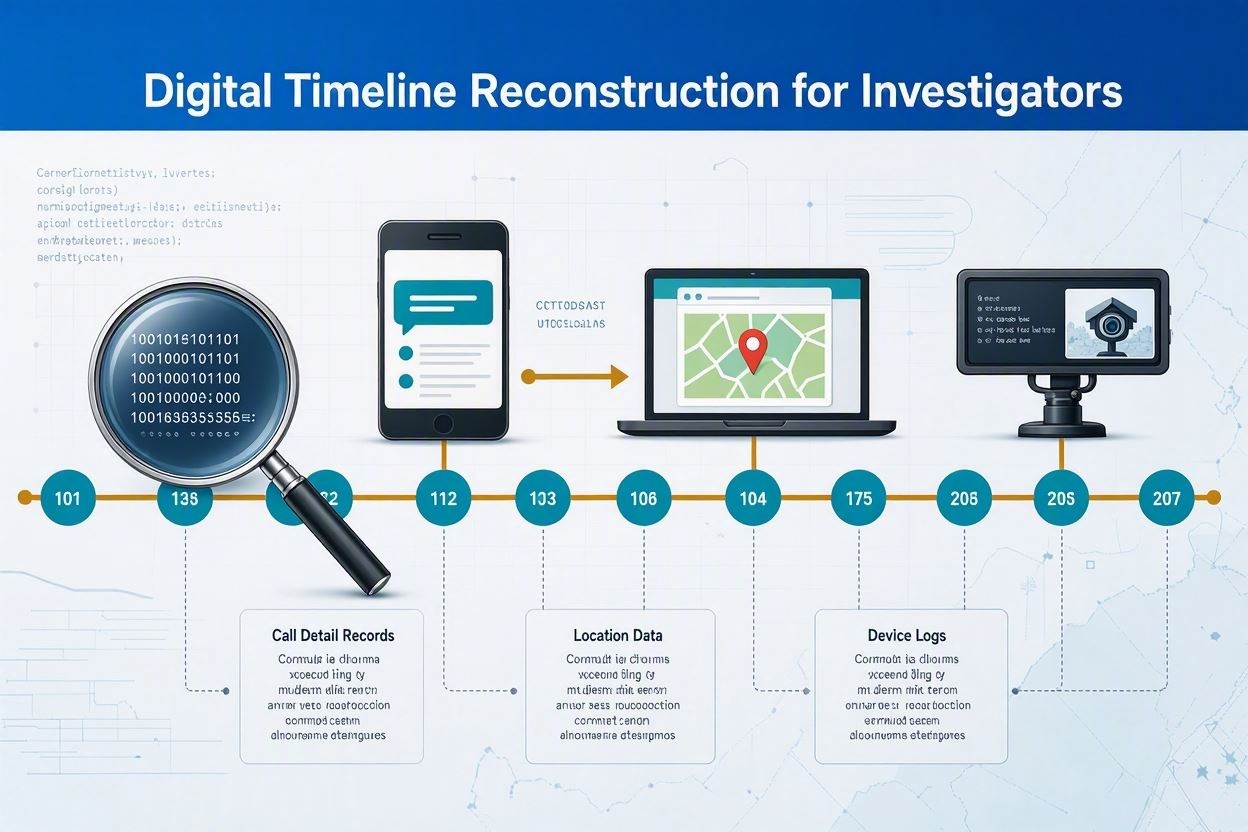
Modern investigations rarely begin with a single witness statement or one physical clue. They often start with thousands of digital traces: phone location records, cloud logins, file metadata, security camera timestamps, chat messages, app activity, payment records, and network logs. A specialized timeline reconstruction program helps investigators transform this fragmented evidence into a coherent sequence of events that can be reviewed, challenged, and explained.
Why Digital Timelines Matter
Time is one of the most important facts in any investigation. Establishing when a person logged into an account, opened a file, moved through a location, or communicated with another party can confirm or undermine a theory of events. Without structured analysis, however, digital evidence can be misleading. Devices may use different time zones, clocks may drift, and timestamps may be stored in formats that are difficult to compare manually.
A timeline reconstruction tool gives investigators a systematic way to normalize, correlate, and visualize these events. Instead of reading separate reports from phones, laptops, servers, and apps, analysts can see how actions align across sources.
How the Program Collects and Normalizes Evidence
The first function of a reliable reconstruction program is ingestion. It imports data from forensic images, extracted mobile device reports, email archives, browser histories, cloud service logs, GPS records, and other structured sources. Strong tools preserve source references so that every timeline entry can be traced back to its original artifact.
Timestamp Normalization
Digital systems record time in many ways. Some use Coordinated Universal Time, while others rely on local device settings. Certain applications store time as Unix epoch values, Windows FILETIME, or proprietary formats. The program converts these variations into a consistent timeline while preserving the original timestamp for verification.
Source Attribution
Every event should answer three questions: what happened, when it happened, and where the information came from. Good software records the file path, database table, log entry, device identifier, and extraction method. This is essential for evidentiary integrity and for explaining findings in court or during internal review.
Turning Raw Traces into Investigative Insight
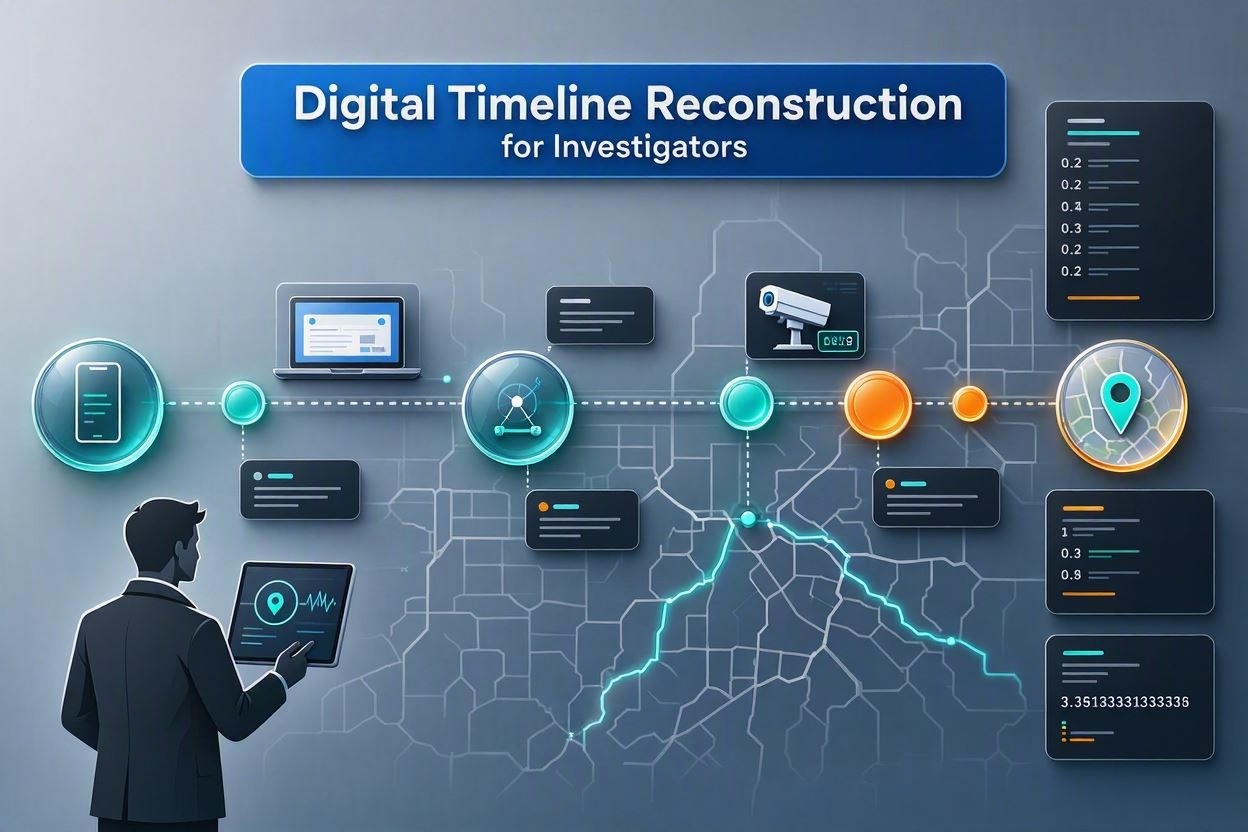
Once evidence is normalized, the program can correlate events that would otherwise remain disconnected. For example, a phone may connect to a Wi-Fi network minutes before a laptop opens a confidential document. A ride-share receipt may align with a geolocation point and a messaging exchange. Individually, these traces may appear routine; together, they can create a meaningful narrative.
- Identify gaps where expected activity is missing.
- Detect clusters of activity around critical moments.
- Compare statements against device and account behavior.
- Highlight conflicting timestamps or suspicious anomalies.
- Separate user-created events from automated system activity.
Filtering Noise
Digital devices generate constant background activity. Automatic updates, sync processes, notifications, backups, and system checks can overwhelm an analyst. A useful timeline program allows filtering by source, event type, keyword, user account, device, location, or confidence level. This keeps attention on relevant events without deleting or altering the underlying data.
Visual Analysis
Charts, heat maps, and layered timelines help investigators detect patterns more quickly than spreadsheets alone. Visual interfaces can show overlapping activity across multiple people or devices, making it easier to test competing hypotheses. The best systems allow analysts to move from a high-level overview to the original artifact in a few steps.
Maintaining Accuracy and Defensibility
A timeline is only as strong as the evidence and methodology behind it. Investigators must document tool versions, extraction procedures, time zone assumptions, and any manual interpretation. The program should support audit logs, exportable reports, and clear notation when events are inferred rather than directly recorded.
Human judgment remains essential. Software can organize digital traces, but it cannot automatically determine intent, context, or credibility. Analysts must validate key findings, compare them with non-digital evidence, and avoid overstating what a timestamp proves.
Practical Uses in Investigations
Timeline reconstruction is valuable in criminal cases, corporate investigations, incident response, fraud analysis, civil litigation, and missing person inquiries. In a cybersecurity incident, it can reveal the sequence of intrusion, privilege escalation, data access, and exfiltration. In workplace investigations, it may show when documents were copied, shared, renamed, or deleted. In criminal matters, it can help place devices, accounts, or communications in relation to a critical event.
What to Look for in Timeline Reconstruction Software
- Support for multiple evidence sources and common forensic formats.
- Transparent timestamp handling with original and converted values.
- Strong filtering, tagging, and annotation features.
- Export options suitable for reports, briefings, and legal review.
- Auditability, repeatability, and clear source references.
Conclusion
A program that reconstructs event timelines from digital traces does more than arrange timestamps. It helps investigators convert complex technical evidence into a structured, testable account of what happened. When used carefully, such software improves speed, accuracy, and clarity while supporting the standards required for defensible investigations.