
In recent years, there has been a significant advancement in the field of Artificial Intelligence (AI) and Augmented Reality (AR). These technologies have become increasingly popular and have the potential to enhance virtual experiences in various fields such as gaming, education, healthcare, and...
A Smart Exoskeleton Helps Elderly People Walk Without Pain
155
02.07.2026
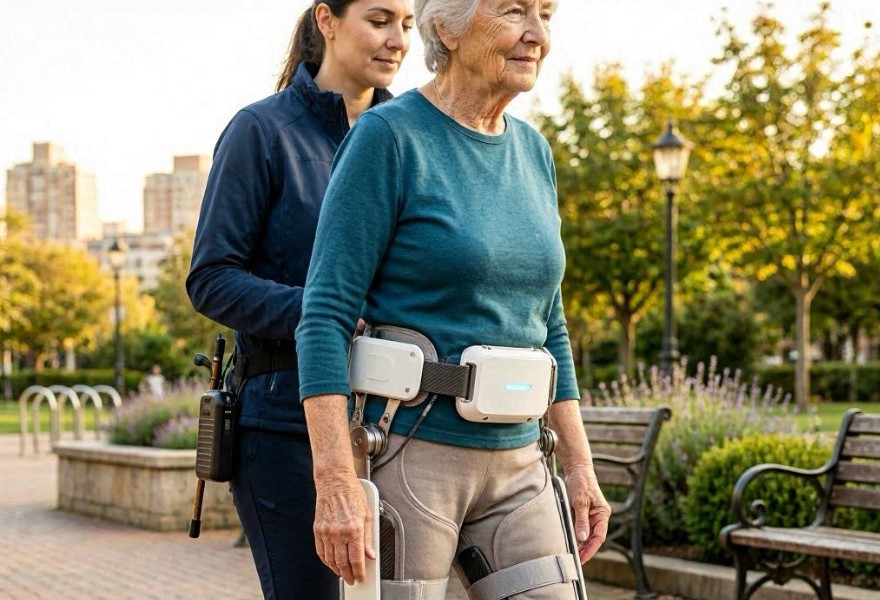
Aging is an inevitable part of the human experience, but the loss of mobility that often accompanies it is not something we have to passively accept. For millions of seniors, conditions like osteoarthritis, muscle atrophy, and general joint instability turn the simple act of walking into a painful, exhausting, and hazardous endeavor. This loss of independence is a leading factor in the decline of psychological well-being among the elderly. However, the dawn of wearable robotics, specifically the smart exoskeleton, is providing a transformative solution. By merging biomechanics with artificial intelligence, these devices are enabling older adults to reclaim their mobility and walk without pain.
A smart exoskeleton is a wearable robotic suit designed to support, assist, or enhance the movement of the lower limbs. Unlike heavy, industrial versions used in manufacturing, the new generation of soft and lightweight exoskeletons is specifically engineered for the comfort and physiological requirements of seniors, focusing on stability and joint pain relief.
The Mechanics of Pain-Free Movement
To walk without pain, one needs consistent support and optimal posture. The smart exoskeleton achieves this through an sophisticated interplay of sensors, actuators, and intelligent software. The system functions as an "external muscle" that wraps around the user, absorbing the impact that would otherwise stress fragile joints.
Adaptive AI and Gait Analysis
The "smart" component of these devices is a neural network that continuously monitors the user’s gait. As an individual walks, the exoskeleton’s sensors detect subtle shifts in weight and balance. If the AI senses that the user is placing too much stress on a painful knee or a weak hip, it adjusts the resistance and support in real-time. This dynamic assistance compensates for muscle weakness, effectively "taking the weight" off the wearer’s joints.
Key Benefits for the Elderly
The impact of this technology extends far beyond simple walking. By restoring a natural gait, the smart exoskeleton creates a ripple effect of health improvements.
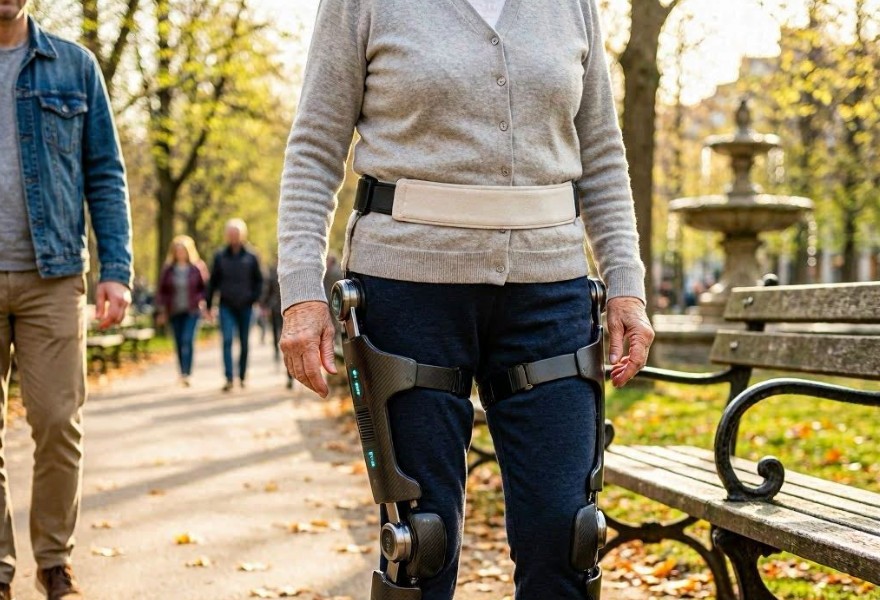
1. Reduction of Joint Impact
Most walking-related pain is caused by the ground reaction force—the impact that travels from the floor, through the feet, and into the knees and hips. Smart exoskeletons are designed with shock-absorbing dampers that dissipate this energy, allowing users to walk on hard surfaces without the inflammation that typically follows.
2. Fall Prevention and Balance
One of the greatest fears for the elderly is falling. The smart exoskeleton provides a "safety net" by detecting sudden slips or stumbles. If the sensors register an unexpected loss of balance, the actuators instantly tense up to provide rigid support, giving the user enough time to stabilize themselves or preventing the fall entirely.
3. Cardiovascular and Metabolic Health
When movement is painful, people tend to become sedentary, which leads to cardiovascular decline. By making walking a pain-free activity, the exoskeleton encourages seniors to be more active. Increased walking leads to improved circulation, better glucose management, and a stronger heart, directly combatting the comorbidities associated with a sedentary lifestyle.
Addressing Comfort and Usability
In the past, wearable robotics were often bulky, loud, and complicated to put on. The latest designs have prioritized user-friendliness:
- Soft-Robotic Materials: Newer suits use textiles integrated with cable-driven actuators, making them lightweight enough to be worn comfortably under or over clothing.
- Intuitive Fit: Magnetic fasteners and "one-click" buckles allow seniors with limited dexterity or arthritis in their hands to put on the suit independently.
- Long-lasting Battery Life: Modern solid-state batteries ensure the device can support a full day of activity, from morning walks to social outings.
The Future of Aging with Dignity
The integration of exoskeletons into daily geriatric care represents a shift from "treating" the symptoms of aging to "augmenting" human capability. As the global population continues to age, the demand for such assistive technology will only grow. These devices offer more than just a mechanical boost; they offer the gift of dignity. Being able to walk to the mailbox, play with grandchildren, or navigate a supermarket without assistance is not just a physical success—it is a victory for the human spirit.
Conclusion
Smart exoskeletons are redefining what it means to grow old. By providing pain-free, stable, and assisted movement, they remove the barriers that keep seniors from living active, fulfilling lives. As the technology becomes more affordable and accessible, we can expect to see a future where aging does not automatically mean the end of mobility. Through this marriage of robotics and human care, we are ensuring that the later years of life remain defined by independence, joy, and the freedom of movement.