

In recent years, there has been a significant advancement in the field of Artificial Intelligence (AI) and Augmented Reality (AR). These technologies have become increasingly popular and have the potential to enhance virtual experiences in various fields such as gaming, education, healthcare, and...
AI Developed Packaging That Decomposes Within a Week
889
20.03.2026

The Global Problem of Packaging Waste
Packaging materials are an essential part of modern commerce. From food products to electronics, almost every item sold today comes with some form of packaging. While packaging protects goods and extends shelf life, it also creates enormous amounts of waste. Many plastic materials used for packaging can remain in the environment for hundreds of years before breaking down.
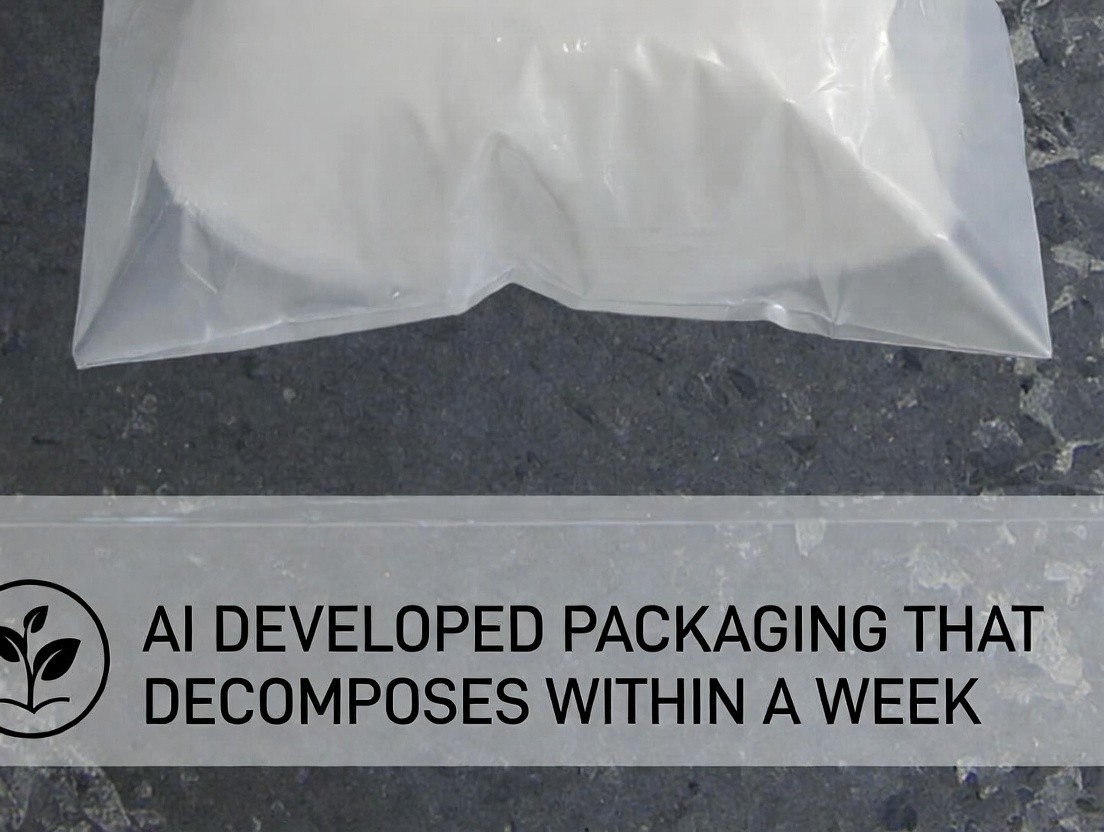
Environmental scientists and engineers have been searching for sustainable alternatives that could replace traditional plastics. One of the most promising developments in this area involves the use of artificial intelligence to design new biodegradable materials. Recently, researchers announced that an AI system successfully helped create packaging that can fully decompose in natural conditions within just one week.
This breakthrough demonstrates how advanced computational technologies can accelerate the development of environmentally friendly materials.
How Artificial Intelligence Helps Design Materials
Designing new materials traditionally requires years of laboratory experimentation. Scientists must test many different chemical compositions to find one that meets all required properties, such as strength, flexibility, and biodegradability.
Artificial intelligence can dramatically speed up this process. Machine learning algorithms analyze large databases of chemical structures and material properties. By examining millions of possible combinations, AI systems can predict which material structures are most likely to produce the desired characteristics.
Tasks Performed by AI in Material Development
- Analyzing chemical databases of biodegradable compounds
- Predicting molecular structures with desired properties
- Simulating material performance before laboratory testing
- Identifying environmentally safe ingredients
- Optimizing the balance between durability and decomposition speed
Using these computational tools, researchers were able to narrow down thousands of possible material combinations to a small number of promising candidates.
What Makes the New Packaging Unique
The newly developed packaging material is based on biodegradable polymers derived from natural sources such as plant fibers and organic compounds. Unlike conventional plastics, which are made from petroleum-based polymers, these materials break down quickly when exposed to natural environmental conditions.
The AI system helped researchers identify a molecular structure that remains stable during product transportation but rapidly decomposes when exposed to moisture, microbes, and natural environmental factors.
Key Characteristics of the Material
- Fully biodegradable within approximately seven days
- Made from renewable plant-based components
- Strong enough to protect packaged products
- Safe for soil and marine environments
- Compatible with existing packaging production methods
Because the material can be processed using conventional packaging equipment, it may be easier for manufacturers to adopt it without major changes to production systems.
Environmental Benefits of Rapid Decomposition
Traditional plastic packaging can remain in landfills or oceans for decades or even centuries. Over time, these materials break into microplastics that contaminate ecosystems and pose risks to wildlife.
Packaging that decomposes within a week could significantly reduce environmental pollution. Once discarded, the material naturally breaks down into organic compounds that are harmless to soil and water.
- Reduction of long-term plastic pollution
- Lower accumulation of waste in landfills
- Reduced microplastic contamination
- Improved sustainability of packaging industries
- Support for circular economy initiatives
These advantages could make biodegradable packaging an important component of future environmental protection strategies.
Challenges for Large-Scale Production
Although the new packaging material shows great promise, several challenges must be addressed before it becomes widely available. Large-scale production requires stable supply chains for biodegradable raw materials and efficient manufacturing processes.
Researchers must also ensure that the material performs reliably under different storage conditions. Packaging must remain durable during transportation and storage while still decomposing quickly after disposal.
Economic factors also play an important role. The cost of producing biodegradable materials must become competitive with traditional plastic packaging to encourage widespread adoption.
The Future of AI in Sustainable Innovation
The development of fast-decomposing packaging illustrates the growing role of artificial intelligence in sustainable innovation. AI systems are capable of analyzing complex scientific data and accelerating discoveries in fields such as materials science, chemistry, and environmental engineering.
In the future, artificial intelligence may help design new biodegradable materials for other applications, including textiles, construction materials, and electronic components. Researchers are already exploring AI-assisted methods for creating environmentally friendly alternatives to many common industrial products.
By combining advanced computing with environmental science, artificial intelligence is helping researchers address some of the most urgent sustainability challenges of the modern world. Packaging that decomposes within a week may represent just the beginning of a new generation of eco-friendly materials designed with the assistance of intelligent algorithms.