In recent years, there has been a significant advancement in the field of Artificial Intelligence (AI) and Augmented Reality (AR). These technologies have become increasingly popular and have the potential to enhance virtual experiences in various fields such as gaming, education, healthcare, and...
AI Learns to Repair Vintage Televisions by Watching Video Instructions: Preserving Lost Technical Knowledge
971
10.02.2026
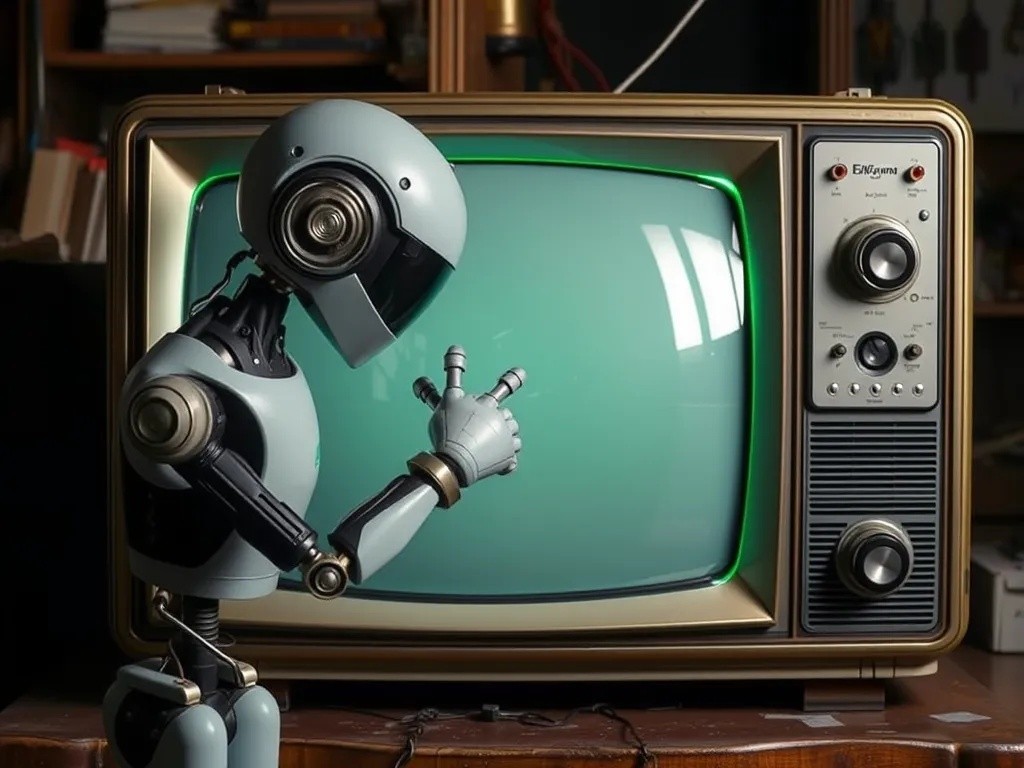
As the generation of technicians skilled in repairing cathode ray tube televisions and other vintage electronics approaches retirement, a new artificial intelligence system offers hope for preserving this disappearing expertise. Researchers have developed an AI capable of learning repair techniques simply by watching video tutorials, then applying this knowledge to diagnose and fix old television sets.
The Problem of Vanishing Expertise
Vintage electronics repair represents a dying art. The technicians who once serviced millions of tube-based televisions, radios, and audio equipment developed their skills over decades of hands-on experience. As these experts retire or pass away, their knowledge threatens to disappear entirely, leaving countless classic devices destined for landfills rather than restoration.
Why Preservation Matters
The importance of maintaining vintage electronics extends beyond mere nostalgia:
- Historical significance of preserved media equipment
- Environmental benefits of repair over replacement
- Cultural value of maintaining technological heritage
- Educational opportunities for understanding electronic fundamentals
- Economic value of restored collectible devices
How the AI System Works
The research team developed a multimodal artificial intelligence system that combines computer vision, natural language processing, and robotic control systems. This integrated approach allows the AI to watch, understand, and ultimately replicate the repair processes demonstrated in instructional videos.
Video Analysis and Comprehension
The system begins by processing video tutorials created by experienced repair technicians. Advanced computer vision algorithms identify components, tools, and hand movements, while natural language processing extracts verbal explanations and instructions. The AI builds comprehensive models of repair procedures by synthesizing visual and auditory information.
Knowledge Representation
Learned repair procedures are stored in a structured knowledge base that the AI can query when encountering new problems. The system develops understanding of common failure modes, diagnostic techniques, and appropriate solutions for different types of malfunctions.
From Learning to Practice
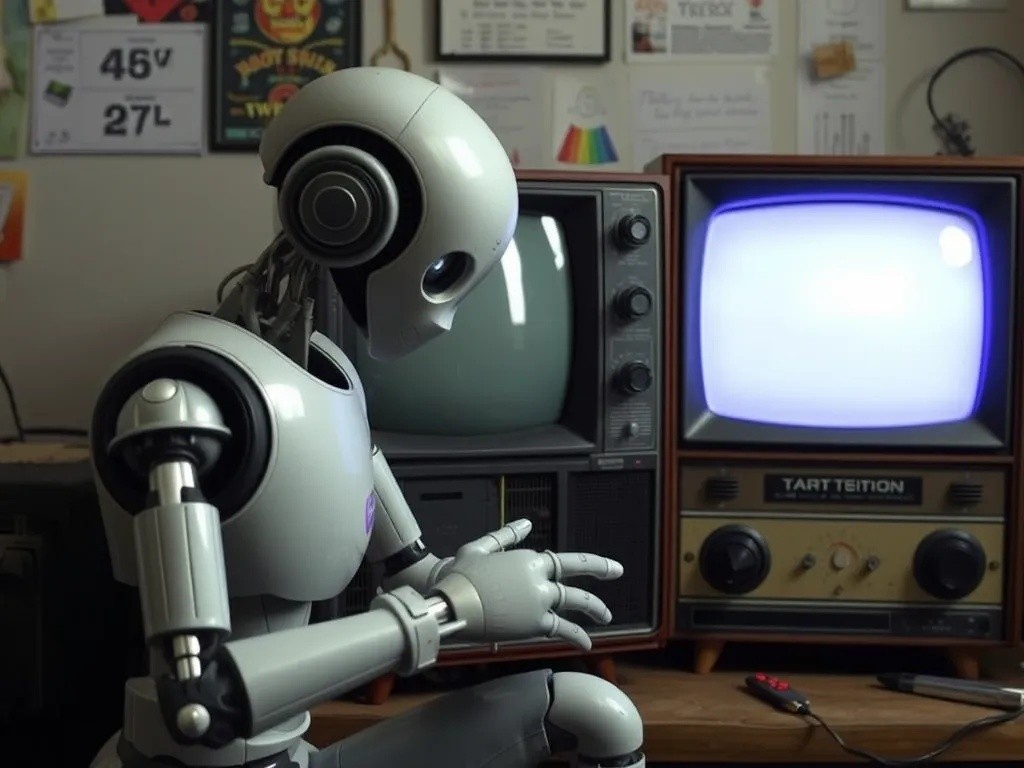
The most impressive aspect of this system is its ability to translate learned knowledge into physical repair actions. Connected to robotic arms equipped with specialized tools, the AI can perform actual repairs on vintage television sets with remarkable precision.
Diagnostic Capabilities
When presented with a malfunctioning television, the AI follows diagnostic procedures learned from videos, using sensors to measure voltages, detect heat signatures, and identify visual anomalies. Based on these observations, it formulates repair strategies drawing on its accumulated knowledge.
Repair Execution
Once diagnosis is complete, the robotic system performs necessary repairs including component replacement, soldering, and adjustment of analog circuits. The AI continuously monitors its work, comparing results against expected outcomes and adjusting its approach as needed.
Results and Performance
Testing has demonstrated impressive results, with the AI successfully repairing various common television malfunctions including power supply failures, picture tube issues, and audio circuit problems. While not yet matching the intuition of highly experienced human technicians, the system shows continuous improvement as it processes more instructional content.
Broader Implications
This research suggests a powerful model for preserving technical knowledge across many domains. As skilled craftspeople and technicians retire, AI systems could learn from their documented expertise, ensuring valuable practical knowledge survives for future generations.
Beyond preservation, such systems could democratize access to repair services. Communities lacking local repair expertise could potentially access AI-guided restoration for vintage electronics, automobiles, appliances, and other complex devices, reducing waste and extending the useful life of manufactured goods.
Future Development
Researchers continue refining the system, expanding its capabilities to include additional types of vintage electronics and more complex repair scenarios. The ultimate goal is creating comprehensive AI systems that can preserve and apply the accumulated wisdom of generations of skilled technicians, ensuring their expertise benefits humanity long after they themselves are gone.