

In recent years, there has been a significant advancement in the field of Artificial Intelligence (AI) and Augmented Reality (AR). These technologies have become increasingly popular and have the potential to enhance virtual experiences in various fields such as gaming, education, healthcare, and...
Algorithm Detects Underground Water Pipe Leaks
1061
19.03.2026

The Hidden Problem of Underground Water Leaks
Water distribution systems are one of the most critical parts of modern urban infrastructure. Cities depend on complex networks of underground pipes that transport clean water to homes, businesses, and public facilities. However, many of these pipelines are aging and prone to damage. Small cracks, corrosion, or joint failures can lead to leaks that waste large amounts of water.
Detecting underground leaks is extremely difficult. Since pipes are buried beneath streets and buildings, traditional inspections often require digging or expensive equipment. In many cases, leaks remain unnoticed for months, leading to water loss, infrastructure damage, and increased repair costs.
To solve this challenge, engineers have developed algorithms capable of detecting leaks by analyzing data collected from sensors installed in water networks. These intelligent systems help utilities identify problems quickly without excavating large sections of the pipeline.
How Leak Detection Algorithms Work
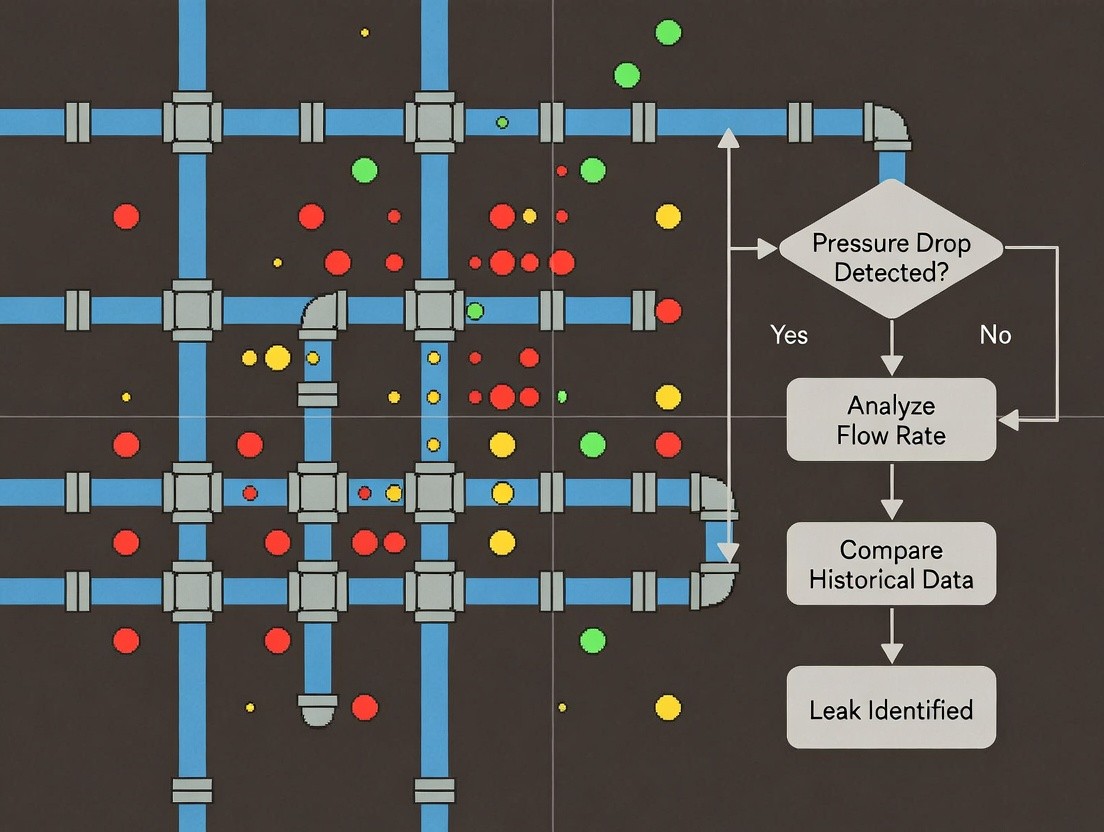
The algorithm monitors data collected from various sensors placed along the pipeline system. These sensors measure factors such as pressure changes, vibration signals, and sound waves traveling through the pipes. When a leak occurs, it produces unique patterns in these signals.
Machine learning algorithms analyze the sensor data in real time and compare it with normal operating conditions. If the system detects unusual patterns that resemble known leak signatures, it alerts engineers and identifies the probable location of the problem.
Key Types of Data Used for Detection
- Water pressure fluctuations
- Acoustic signals inside the pipes
- Vibration patterns from flowing water
- Flow rate changes
- Temperature variations around pipelines
By analyzing multiple types of data simultaneously, the system can detect even very small leaks that would be difficult to identify through manual inspection.
Acoustic Monitoring Technology
One of the most effective methods for detecting underground leaks is acoustic monitoring. When water escapes from a pipe through a crack or hole, it creates a specific sound frequency caused by turbulence. Specialized microphones and acoustic sensors installed along the pipeline capture these sound signals.
The algorithm processes the recorded audio patterns and distinguishes leak sounds from background noise produced by pumps, traffic vibrations, or normal water flow.
Steps in Acoustic Leak Detection
- Sensors record sound vibrations inside the pipeline
- Signal processing filters background noise
- The algorithm analyzes sound frequency patterns
- Potential leak signatures are identified
- The system estimates the location of the leak
This technique allows water utilities to locate leaks with high precision without disturbing the surrounding infrastructure.
Benefits for Cities and Water Utilities
Using intelligent algorithms for leak detection offers major advantages for urban water management. Water loss caused by leaks can reach significant levels in many cities. Early detection helps reduce waste and protects valuable water resources.
In addition, detecting leaks early prevents serious infrastructure damage. Large underground leaks can weaken road foundations, damage nearby structures, and increase repair costs if they remain unnoticed.
- Reduced water loss in distribution networks
- Faster identification of pipeline damage
- Lower maintenance and repair costs
- Improved reliability of water supply systems
- Reduced environmental impact
These benefits make algorithm-based monitoring an important tool for modern infrastructure management.
Integration with Smart City Infrastructure
Leak detection algorithms are increasingly becoming part of larger smart city systems. Many modern water networks include digital monitoring platforms that collect data from thousands of sensors installed throughout urban infrastructure.
These platforms allow engineers to observe pipeline conditions in real time and respond quickly to potential issues. When the algorithm detects a leak, it can automatically send alerts to maintenance teams, including the estimated location of the problem.
Some systems can also predict potential pipe failures by analyzing historical data and identifying patterns associated with aging infrastructure.
The Future of Intelligent Water Networks
The development of intelligent leak detection technology represents a major step toward smarter and more sustainable water management. As sensor technology becomes more affordable and data analysis techniques continue to improve, water utilities will gain even more accurate tools for monitoring pipeline systems.
Future systems may combine satellite imaging, ground vibration sensors, and artificial intelligence to detect leaks across entire city networks. Predictive maintenance algorithms could identify pipes that are likely to fail before leaks occur.
These innovations will help cities protect one of their most valuable resources while maintaining reliable water infrastructure. By using algorithms to monitor underground pipelines, engineers can respond to problems faster and ensure that water distribution systems remain efficient and sustainable for years to come.