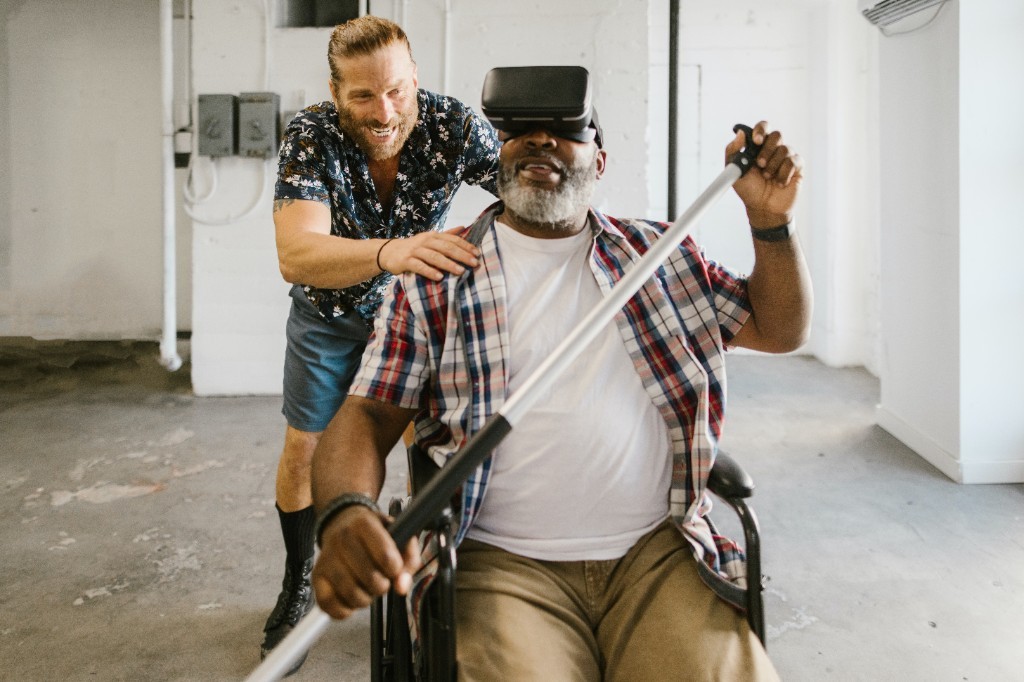

In recent years, there has been a significant advancement in the field of Artificial Intelligence (AI) and Augmented Reality (AR). These technologies have become increasingly popular and have the potential to enhance virtual experiences in various fields such as gaming, education, healthcare, and...
An Algorithm Helps Pilots Train Without a Real Aircraft
34
10.08.2026
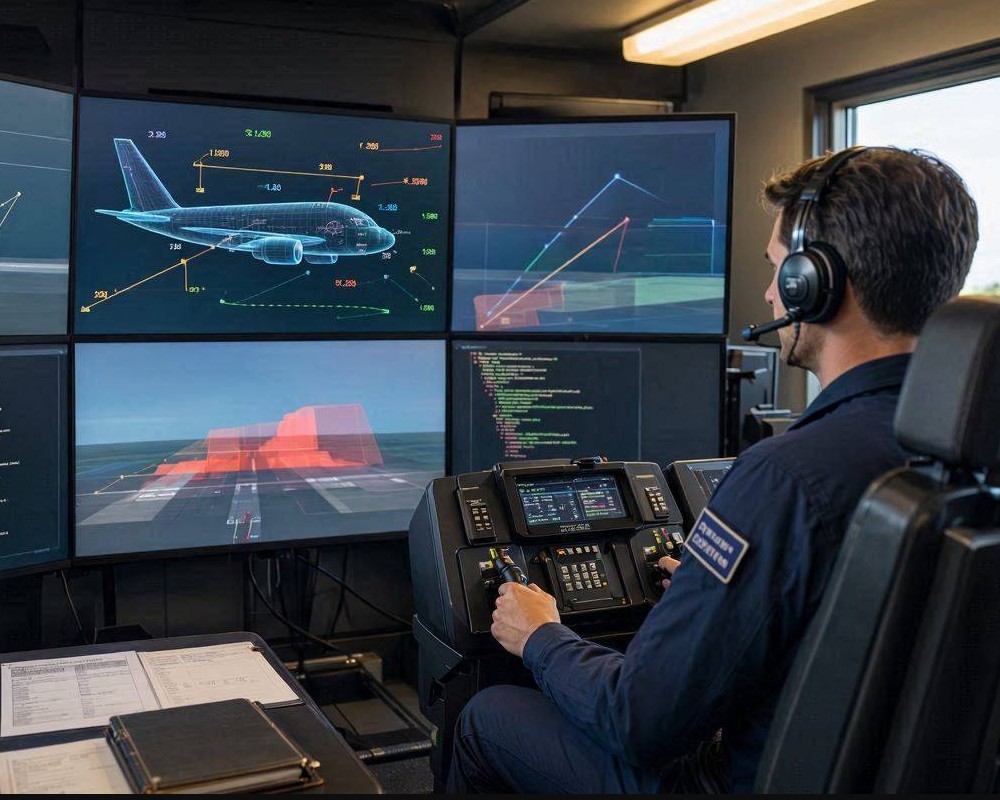
Training pilots has always required a careful balance between realism and cost. Traditional instruction relies on real aircraft time for procedural practice, emergency handling, and familiarization with flight dynamics. Yet aircraft availability, fuel expenses, maintenance cycles, weather constraints, and safety considerations can slow training and increase risks. A growing solution is emerging: an algorithm that helps pilots train without needing an actual aircraft, turning simulation sessions into structured, measurable practice.
Why simulations are evolving beyond “screen time”
Most flight simulators can reproduce visuals and basic controls, but effective training depends on more than graphics. Pilots must practice decisions under time pressure, recover from unusual states, and demonstrate consistent performance across a wide range of conditions. A dedicated training algorithm focuses on those outcomes by guiding scenarios, adapting difficulty, and providing feedback that mirrors real instructional goals.
Instead of running fixed lessons, the system can interpret a pilot’s actions and continuously adjust the environment. This means a learner who stabilizes smoothly after a disturbance can be challenged sooner, while someone who struggles with airspeed management may receive additional cues and practice opportunities.
How the training algorithm works
At the core, the algorithm models flight tasks as a set of measurable objectives and decision checkpoints. It then connects the pilot’s inputs to outcomes, such as altitude control accuracy, energy management, workload distribution, and response timing. While the specifics may vary by implementation, the principles are consistent: translate piloting into performance metrics, run scenarios that test those metrics, and iterate based on results.
Scenario generation and adaptive difficulty
The algorithm can generate training events—like crosswinds, sensor anomalies, unexpected traffic spacing, or approach instability—within a controlled boundary. It determines how frequently events occur, how severe they become, and which combinations best reinforce learning objectives.
Adaptive difficulty is particularly valuable during early training. If a pilot consistently overcorrects, the system can reduce the amplitude of disturbances while keeping the timing unpredictable. If the pilot demonstrates strong situational awareness, the algorithm can introduce more cognitive load without making the flight model unrealistic.
Real-time assessment and coaching
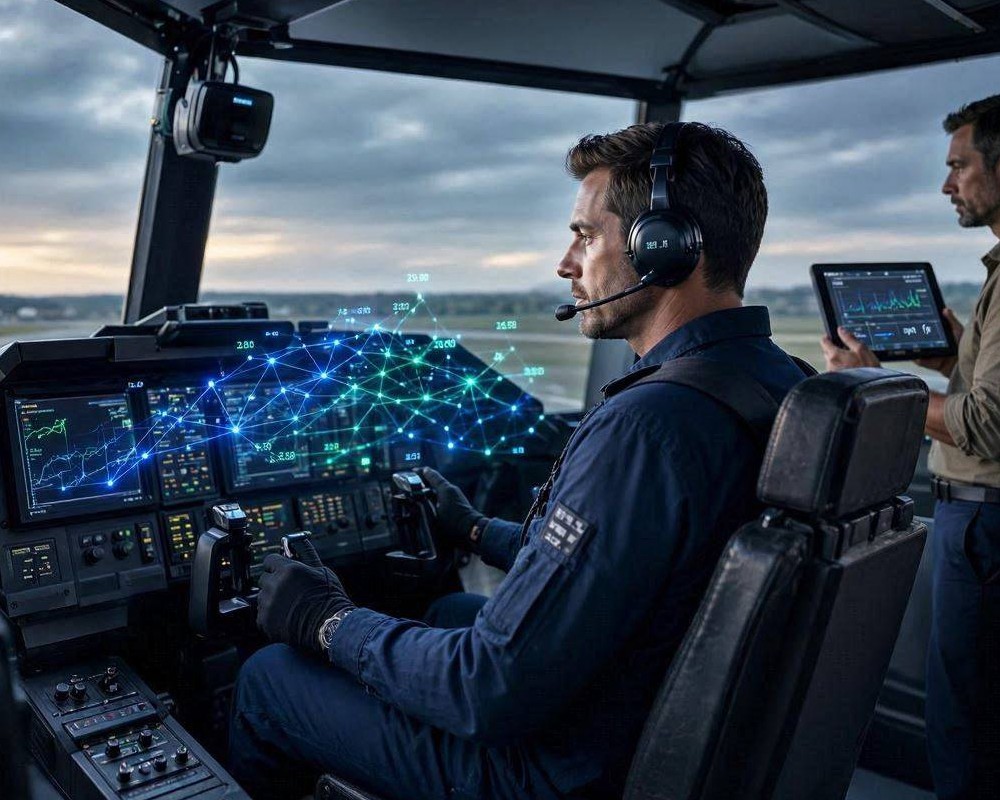
During a session, the algorithm evaluates flight path deviations, control smoothness, adherence to standard callouts, and the effectiveness of recovery procedures. It can then translate data into instructional guidance such as:
- when to trim and when to avoid abrupt control changes
- how quickly airspeed should be stabilized after thrust or configuration changes
- which procedural step should be executed next based on current aircraft state
Feedback that supports skill transfer
Simulation training can fail if feedback is purely technical or too delayed. An algorithmic approach helps by aligning feedback with the moment decisions matter. For example, it can flag a missed checklist action or an incorrect stabilization criterion immediately after it influences the outcome, encouraging immediate correction rather than post-hoc confusion.
Benefits pilots and instructors gain
Reducing dependence on real aircraft doesn’t mean reducing training quality. When the algorithm is designed around real-world competencies, the simulation becomes a reliable practice environment. Key advantages include:
- Lower cost and faster scheduling: training can occur when aircraft are unavailable, with consistent access to scenarios.
- Improved safety for rare events: failures and emergencies can be practiced repeatedly without exposing passengers or instructors to unnecessary risk.
- Objective performance tracking: instructors can compare session results over time, spotting patterns like gradual drift in technique or inconsistent recovery logic.
- Personalized learning paths: each pilot can receive targeted practice based on demonstrated strengths and weaknesses.
What “no real aircraft” really means
The phrase “without a real aircraft” does not imply purely virtual flight with no connection to reality. Instead, the aircraft dynamics used by the simulator and the training algorithm’s evaluation logic are calibrated to reflect real procedures and constraints. The goal is not to replace all flight time, but to reduce the amount needed for foundational skills and allow real-aircraft sessions to focus on what simulations cannot fully replicate—such as specific local conditions, spatial perception cues in the real cockpit, and regulatory flight requirements.
Where this approach fits best
- initial procedural training and standardization
- approach stabilization and go-around decision-making
- instrument cross-check and scan management under stress
- emergency recognition and recovery drills with repeatable timing
The future: from training to continuous readiness
As algorithms improve, pilot training may evolve into a continuous readiness model. Instead of periodic sessions only during courses, pilots could practice targeted skill refreshers on a schedule, with the algorithm ensuring they remain competent in areas most likely to degrade over time. The outcome is a training ecosystem that is more responsive, measurable, and consistent—helping pilots build confidence and competence long before they touch the runway.