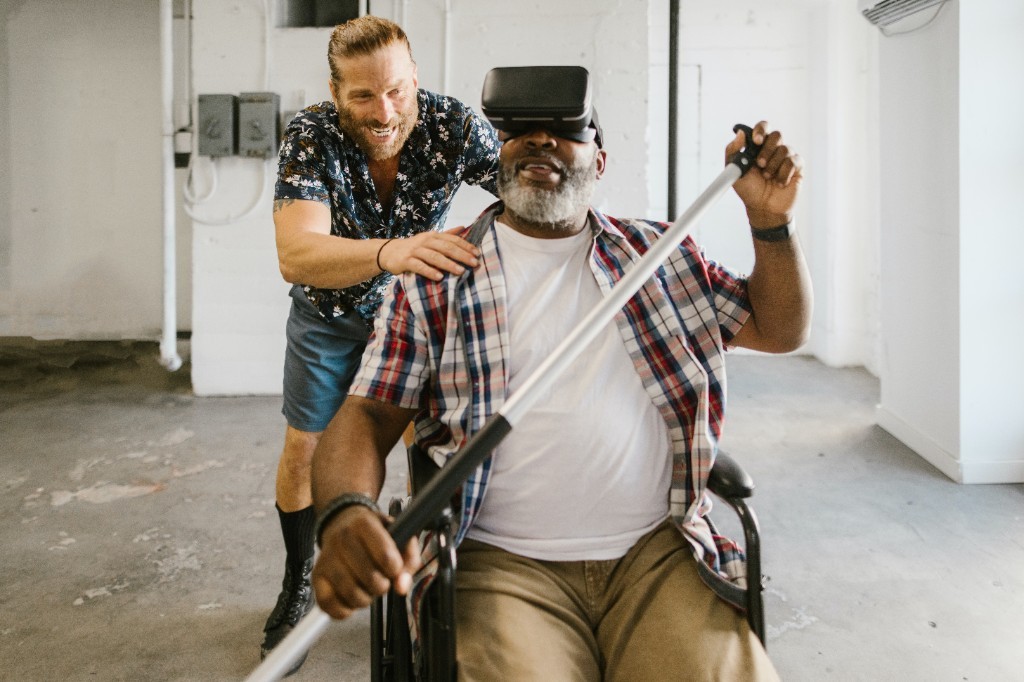

In recent years, there has been a significant advancement in the field of Artificial Intelligence (AI) and Augmented Reality (AR). These technologies have become increasingly popular and have the potential to enhance virtual experiences in various fields such as gaming, education, healthcare, and...
An Algorithm Predicts Negotiation Outcomes by Analyzing Participants' Vocal Tone
26
11.08.2026

Why vocal tone matters in negotiations
Negotiations rarely hinge on what people say alone. The words are important, but the delivery often carries the real signal: confidence, urgency, frustration, openness, and willingness to compromise. An algorithm that predicts negotiation outcomes by analyzing participants’ vocal tone focuses on these subtle cues—pitch patterns, speaking rate, volume dynamics, pauses, and emotional prosody—to estimate how a conversation is likely to end.
In practice, this approach treats negotiation as a communication system. When one party becomes louder, faster, or more monotone under stress, the interaction typically shifts. The model can learn these patterns from historical recordings and outcomes, enabling forecasting before the final agreement is reached.
How the algorithm works
At a high level, the system follows a pipeline: capture audio, extract vocal features, model conversation dynamics, and output a prediction. The sophistication lies in linking acoustic signals to measurable negotiation behaviors and eventual results.
1) Audio capture and preprocessing
Recordings are segmented into time windows—often seconds long—so the algorithm can track how tone evolves. Noise reduction and voice activity detection help separate speech from background sound. If multiple speakers are present, diarization assigns features to the correct participant.
2) Vocal feature extraction
The algorithm converts raw audio into features commonly associated with communication state. Examples include:
- Prosody metrics: changes in pitch contour and intonation range
- Timing: speaking rate, pause frequency, and turn-taking rhythm
- Intensity: loudness variations that may correlate with emphasis or tension
- Stability and variability: how consistent the voice remains across statements
3) Learning outcome correlations
Once features are extracted, machine learning models map tone patterns to outcomes such as agreement, midpoint deviation, or concession magnitude. Importantly, the algorithm may consider temporal order—how early signals influence later behavior—rather than relying solely on averages across the entire conversation.
What outcomes can be predicted
While the exact labels depend on the dataset, vocal-tone-based models are often used to predict several negotiation dimensions:
- Probability of reaching agreement by detecting escalation or cooperative cadence
- Expected concession level when one party’s tone indicates flexibility or resistance
- Timing of resolution, including whether talks are likely to stall
- Risk of breakdown tied to rising tension markers (e.g., increased abruptness, shorter pauses, or heightened intensity)
The practical value is early insight. Even a moderate improvement over intuition can help teams adjust strategy—cooling down, clarifying terms, or reframing proposals—before the interaction hardens.

Why the model can outperform intuition
Human negotiators are skilled at reading cues, but they can miss micro-signals, especially in long or fast-moving discussions. A vocal-tone algorithm offers three advantages:
- Consistency: it evaluates every meeting with the same feature criteria, not mood-based biases.
- Sensitivity to dynamics: it detects turning points—when tone shifts—more reliably than subjective recollection.
- Quantification: it translates qualitative impressions into scores that can be tracked across sessions.
For example, two negotiators might speak politely yet differ in cadence. A model can recognize patterns that suggest one party is signaling compliance while the other is reserving objections for later.
Ethical and practical considerations
Using vocal data introduces sensitivity issues. Tone can reflect stress, health, accent differences, or disability-related speech characteristics. Responsible deployment requires transparency, fairness testing across demographics, and clear consent or governance frameworks.
Teams should also treat predictions as decision support, not as deterministic verdicts. The model can indicate that the conversation resembles historically unsuccessful trajectories, but it cannot know the full context—legal constraints, market shifts, or information asymmetry.
How to use vocal-tone predictions in real negotiations
When integrated into a negotiation workflow, the system can serve as an early-warning and coaching tool. Common uses include:
- Pre-meeting calibration: establishing communication guidelines for stress management and pacing.
- Real-time monitoring: flagging escalation signals so teams can pause and reframe.
- Post-deal review: identifying which tone shifts preceded concessions or breakdowns.
To maximize impact, pair the model’s outputs with clear action playbooks. For instance, if the algorithm detects intensifying tension, negotiators might reduce tempo, ask confirmatory questions, and restate shared goals to rebuild trust.
The future of negotiation intelligence
Vocal tone is only one channel. The next generation of systems may combine audio with language features (sentiment, argument structure), conversational behavior (question rate, interruptions), and even cross-cultural speech norms. Still, tone analysis is a strong foundation: it captures emotional state and interactive friction early enough to influence outcomes.
As negotiation environments become more data-driven, algorithms that predict results through vocal tone can help teams move from reactive improvisation to proactive strategy—while improving clarity, fairness, and the chances of reaching durable agreements.