
In recent years, there has been a significant advancement in the field of Artificial Intelligence (AI) and Augmented Reality (AR). These technologies have become increasingly popular and have the potential to enhance virtual experiences in various fields such as gaming, education, healthcare, and...
An Algorithm Selects Interior Colors to Match the Psychological Profile of Residents
13
15.11.2026
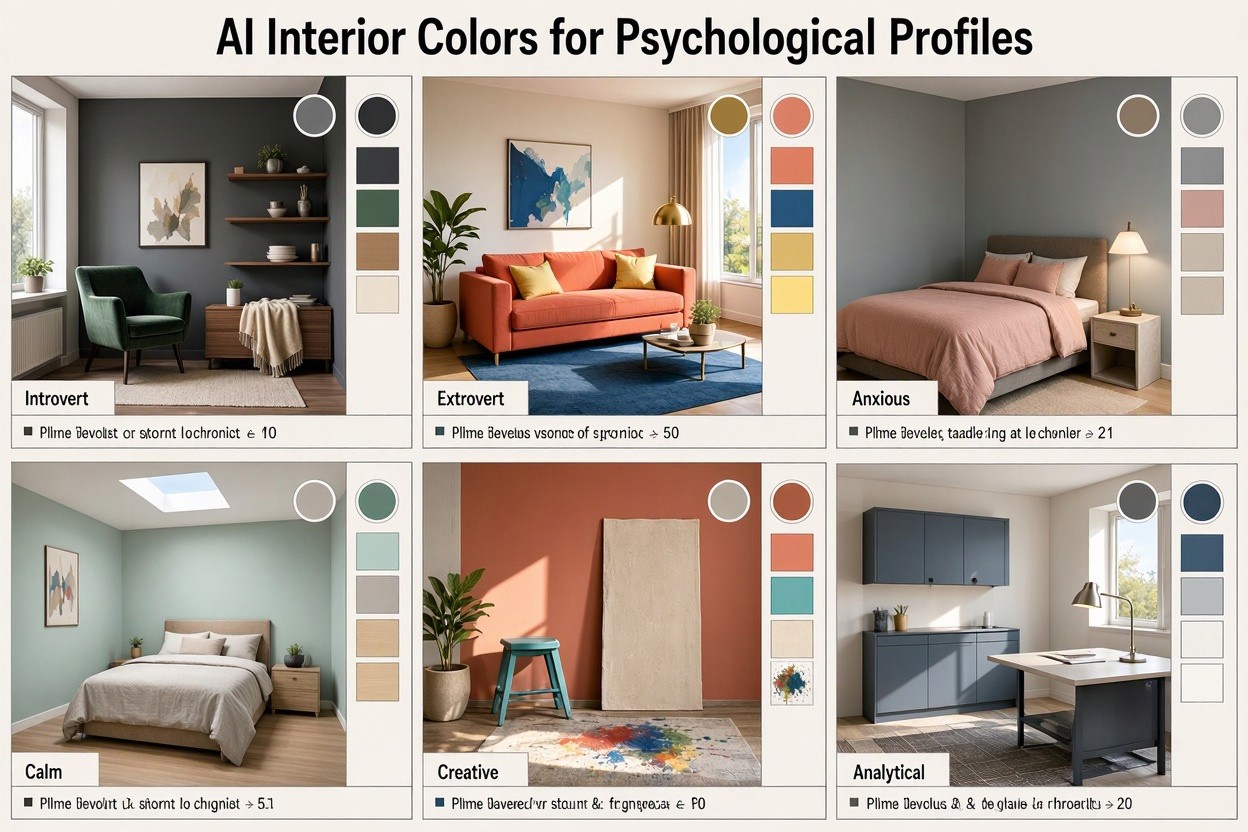
Interior color has always influenced mood, attention, rest, and social behavior. What is changing now is the method used to choose it. Instead of relying only on trends, personal guesses, or a designer’s intuition, new algorithmic tools can recommend color palettes based on the psychological profile of the people who live in a home. The result is not a generic “calming blue” or “energetic yellow,” but a more precise interior strategy shaped by personality, habits, sensory sensitivity, and daily routines.
How Psychological Color Matching Works
A color-selection algorithm typically combines data from psychology, environmental design, and user preferences. Residents may answer questions about stress levels, sleep quality, social habits, work patterns, and emotional responses to visual stimuli. Some systems also include lifestyle data, such as whether a room is used for remote work, recovery, family gatherings, or creative tasks.
From Questionnaire to Palette
The algorithm translates answers into design parameters. A highly sensitive person may receive softer contrasts and muted tones. Someone who struggles with low energy may benefit from warmer accents in active areas. A resident who needs deep concentration might receive a restrained palette with low visual noise. The tool does not “diagnose” a person; it interprets preferences and behavioral signals to create a more supportive environment.
Why Context Matters
The same color can feel different depending on light, room size, materials, and purpose. A pale green bedroom may feel restorative in natural morning light but dull in a north-facing room. A deep terracotta can make a dining area intimate, yet overwhelm a compact study. Advanced algorithms account for these conditions by adjusting saturation, brightness, and contrast instead of recommending colors in isolation.
Key Psychological Factors Used by the Algorithm
Effective color personalization is based on more than favorite shades. A well-designed system considers how residents process stimulation, recover from stress, and move through the home during the day.
- Stress response: People with high stress may need low-contrast palettes, natural hues, and fewer sharp transitions.
- Energy level: Warm accents, brighter tones, or dynamic combinations can support motivation in kitchens, gyms, or work zones.
- Sleep patterns: Bedrooms often benefit from desaturated colors, balanced darkness, and reduced visual excitement.
- Social comfort: Shared spaces may use welcoming tones that encourage conversation without overstimulation.
- Sensory sensitivity: Residents who are easily distracted may prefer matte finishes, subtle contrasts, and limited color variety.
Room-by-Room Color Intelligence
Bedroom
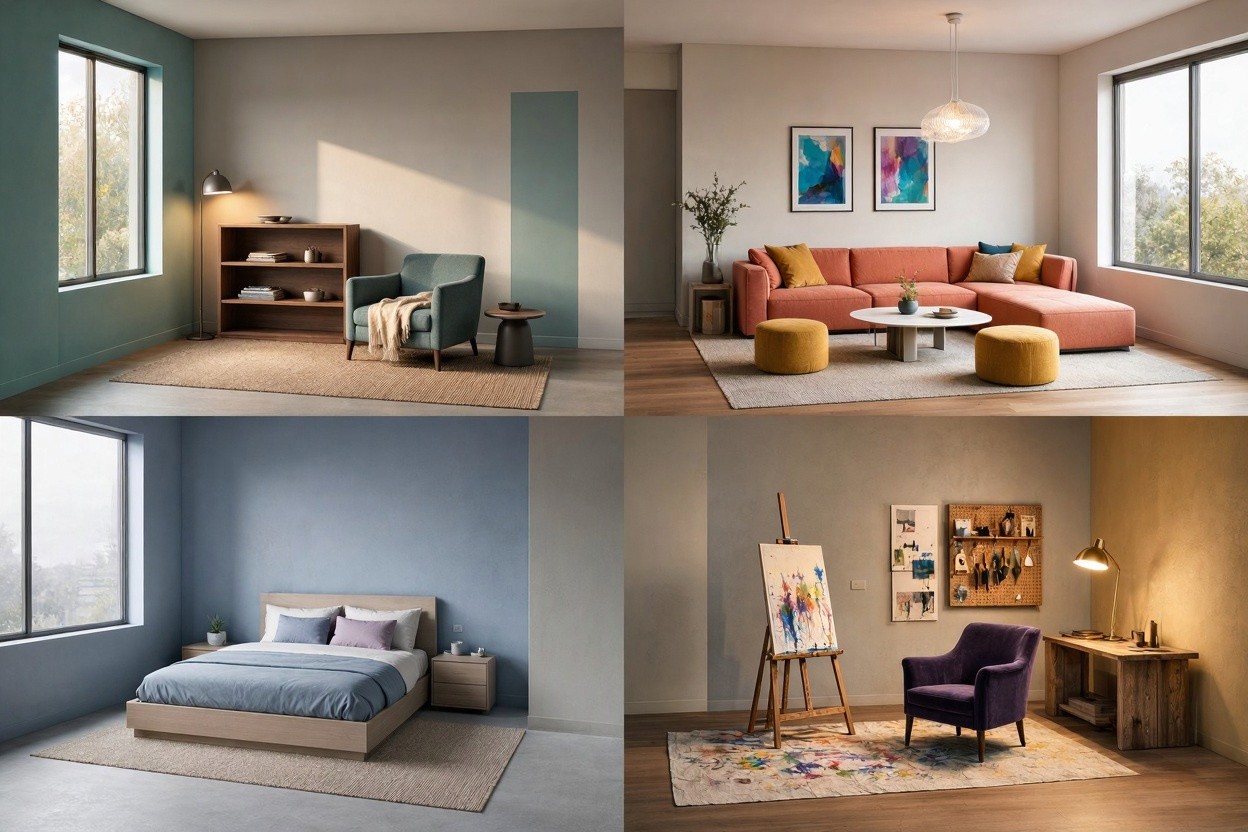
For bedrooms, the algorithm usually prioritizes nervous system regulation. Instead of choosing the most fashionable neutral, it may suggest mineral blues, soft sage, warm greige, or muted lavender, depending on the resident’s emotional profile. If a person associates cool colors with discomfort, the system can select warm neutrals with low saturation to achieve calm without emotional distance.
Home Office
In a work area, the ideal palette depends on the type of thinking required. Analytical tasks often benefit from clarity, order, and minimal distraction. Creative work may need more visual warmth or controlled accent colors. An algorithm can recommend a stable base color, then add limited stimulation through one wall, shelving, artwork, or accessories.
Living Room
The living room is more complex because it serves multiple emotional functions. It may need to feel open during the day, cozy in the evening, and comfortable for guests. A profile-aware system can balance household preferences by identifying shared comfort zones, then using accents to represent individual personalities without visual conflict.
Benefits for Residents and Designers
Algorithmic color selection does not replace interior designers. It gives them a more informed starting point. Designers can use the data to reduce trial and error, avoid purely trend-driven choices, and explain recommendations with greater confidence. For residents, the benefit is practical: fewer repainting mistakes, better room functionality, and a stronger sense that the home fits their emotional life.
- It connects color decisions to daily behavior, not only aesthetics.
- It helps households with different tastes find balanced compromises.
- It improves consistency between lighting, materials, and mood goals.
- It makes personalization scalable for apartments, offices, and wellness spaces.
Risks and Ethical Considerations
Because psychological profiling involves personal information, privacy is essential. Residents should know what data is collected, how it is stored, and whether it is shared. The algorithm should also allow human correction. A person’s cultural background, memories, and individual associations can override general color psychology. For example, white may feel peaceful to one resident and cold or clinical to another.
Another risk is oversimplification. Color can support well-being, but it cannot solve deeper problems such as chronic stress, poor sleep hygiene, or lack of natural light. The best systems present recommendations as design guidance, not mental health treatment.
The Future of Personalized Interiors
As smart homes evolve, color algorithms may connect with lighting systems, circadian rhythm settings, and adaptive materials. A room could shift from a crisp focus mode in the morning to a softer restorative atmosphere at night. Paint, textiles, and digital lighting may work together as one responsive environment.
The most promising future is not one where machines dictate taste, but one where data helps people understand what makes them feel grounded, alert, safe, or inspired. When an algorithm selects interior colors to match the psychological profile of residents, the home becomes more than a decorated space. It becomes a carefully tuned environment for everyday well-being.