

In recent years, there has been a significant advancement in the field of Artificial Intelligence (AI) and Augmented Reality (AR). These technologies have become increasingly popular and have the potential to enhance virtual experiences in various fields such as gaming, education, healthcare, and...
How a Digital Orthopedist Selects Insoles Using Foot Pressure Analysis
1
17.08.2026
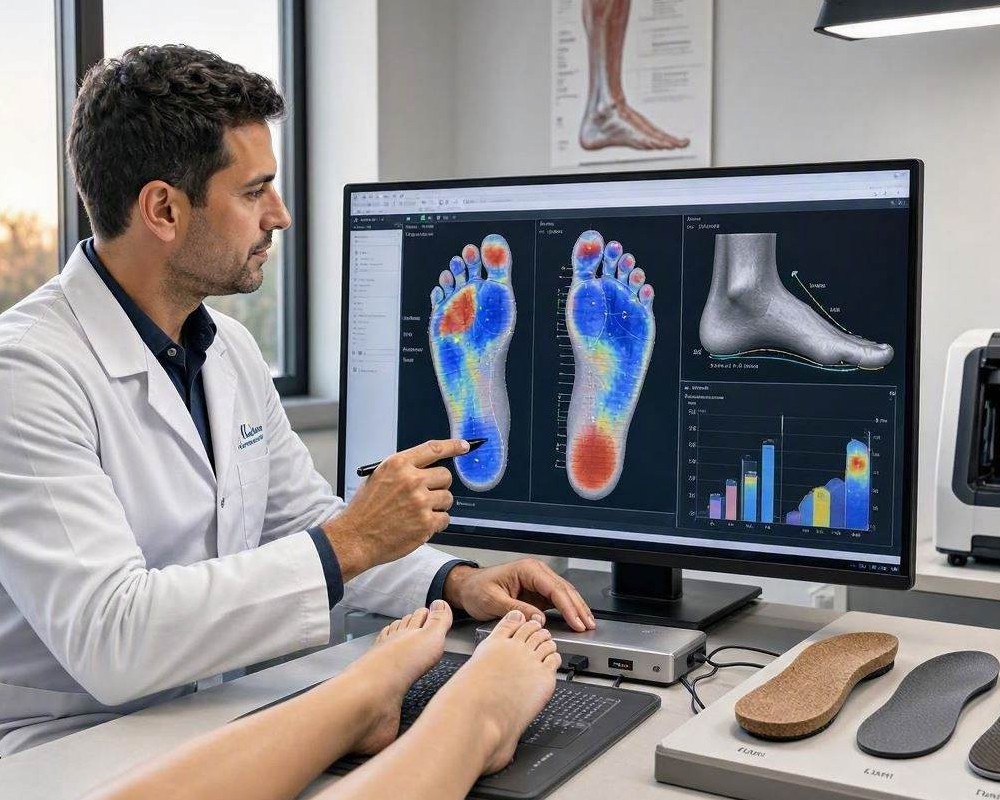
Choosing insoles by shoe size or arch type alone can overlook how a person actually stands and moves. A digital orthopedist uses plantar pressure analysis to identify where the feet carry excessive load, whether weight is distributed unevenly, and how pressure changes during walking. These measurements support a more informed insole recommendation tailored to the user’s biomechanics, footwear, symptoms, and daily activities.
What Is Foot Pressure Analysis?
Foot pressure analysis measures the forces applied by different areas of the sole. Testing is commonly performed on an electronic pressure platform or with sensor-equipped insoles placed inside shoes. Thousands of readings may be collected as the person stands, walks, or runs.
Static and Dynamic Measurements
A static test records pressure while the patient stands still. It can reveal left-to-right imbalance, concentrated loading under the heel or forefoot, and differences in the contact area of each foot. However, standing data cannot fully represent movement.
Dynamic analysis records consecutive steps. It shows how pressure travels from heel strike through midstance to toe-off. The system can assess peak pressure, contact time, loading rate, center-of-pressure progression, and differences between the left and right foot. Repeated trials help reduce the influence of an unusual step.
What a Pressure Map Can Reveal
Colored pressure maps make complex measurements easier to interpret. Warmer colors generally indicate higher loads, but color alone does not establish a diagnosis. The clinician considers numerical values, gait consistency, medical history, joint mobility, foot structure, and the location of pain.
- High heel pressure may suggest a need for cushioning or load redistribution.
- Forefoot overload can influence the choice of metatarsal support.
- Asymmetrical loading may require further assessment of gait, leg length, or joint function.
- Limited great-toe loading may indicate an altered push-off pattern.
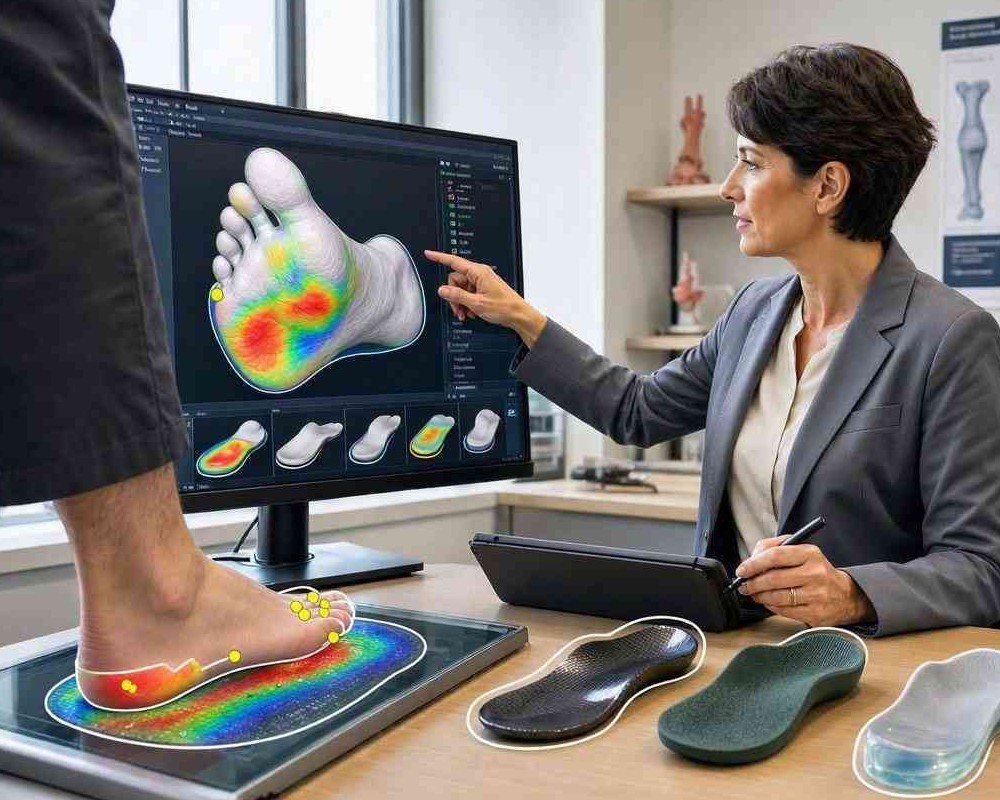
How the Digital Orthopedist Selects an Insole
Step 1: Clinical and Lifestyle Assessment
The process begins with questions about symptoms, previous injuries, health conditions, occupation, sports, and typical footwear. A person who stands on hard floors for eight hours has different requirements from a runner or someone managing diabetes. Shoes are also inspected for fit, stability, internal space, and wear patterns.
Step 2: Data Collection and Interpretation
The patient completes several standing and walking trials at a natural pace. The digital system compares pressure variables and highlights recurring patterns. A qualified professional then determines whether the findings correspond with the physical examination. Reliable selection depends on this clinical interpretation rather than an automated image alone.
Step 3: Matching Insole Features to the Findings
Based on the assessment, the orthopedist may recommend a prefabricated, heat-molded, or custom-manufactured insole. Relevant features can include heel cushioning, arch contour, a deep heel cup, metatarsal support, targeted offloading, or materials of different densities. The goal is not necessarily to eliminate pressure, but to distribute it more safely while preserving comfortable movement.
Benefits and Limitations
Pressure-guided selection provides objective baseline data and allows recommendations to be tested. A follow-up scan can show whether the insole reduces a problematic pressure peak or improves symmetry. It can also help explain why an otherwise well-made device feels uncomfortable.
Nevertheless, pressure analysis is not a standalone diagnostic tool. Results may vary with walking speed, fatigue, footwear, sensor calibration, and the number of recorded steps. Insoles also cannot treat every source of foot, knee, hip, or back pain. Persistent pain, numbness, wounds, swelling, or sudden changes in walking require evaluation by an appropriate healthcare professional.
Follow-Up Is Part of the Process
New insoles often require a gradual adaptation period. The digital orthopedist should review comfort, skin response, shoe fit, and functional changes after regular use. If necessary, the device can be adjusted and pressure testing repeated. This combination of measurable data, clinical judgment, and follow-up makes pressure-based insole selection more precise than choosing support from a generic size chart.