

In recent years, there has been a significant advancement in the field of Artificial Intelligence (AI) and Augmented Reality (AR). These technologies have become increasingly popular and have the potential to enhance virtual experiences in various fields such as gaming, education, healthcare, and...
Neural Network Predicts Flu Epidemics Two Months in Advance
672
30.03.2026
The Challenge of Predicting Flu Outbreaks
Seasonal influenza affects millions of people every year and places significant pressure on healthcare systems. Hospitals often experience sudden increases in patient numbers during flu season, which can lead to overcrowded clinics and shortages of medical resources. Early prediction of influenza outbreaks is therefore extremely important for public health planning.
Traditionally, flu forecasts rely on statistical models that analyze previous years' infection data. While these methods provide useful information, they often struggle to capture the complex factors that influence how viruses spread through populations. Weather conditions, travel patterns, vaccination rates, and human behavior can all affect the timing and severity of an outbreak.
Recent advances in artificial intelligence have introduced a new approach to disease forecasting. Neural networks are now capable of analyzing large and diverse datasets to predict flu epidemics weeks or even months in advance.
How Neural Networks Forecast Flu Epidemics
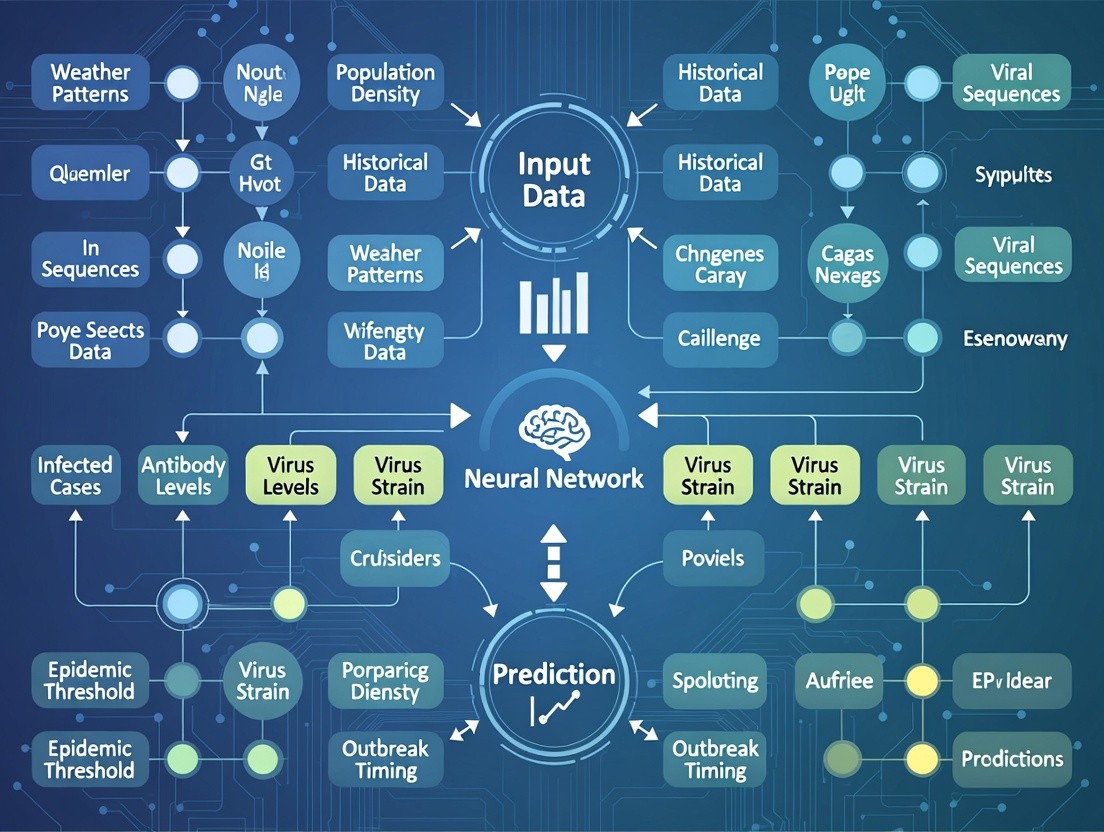
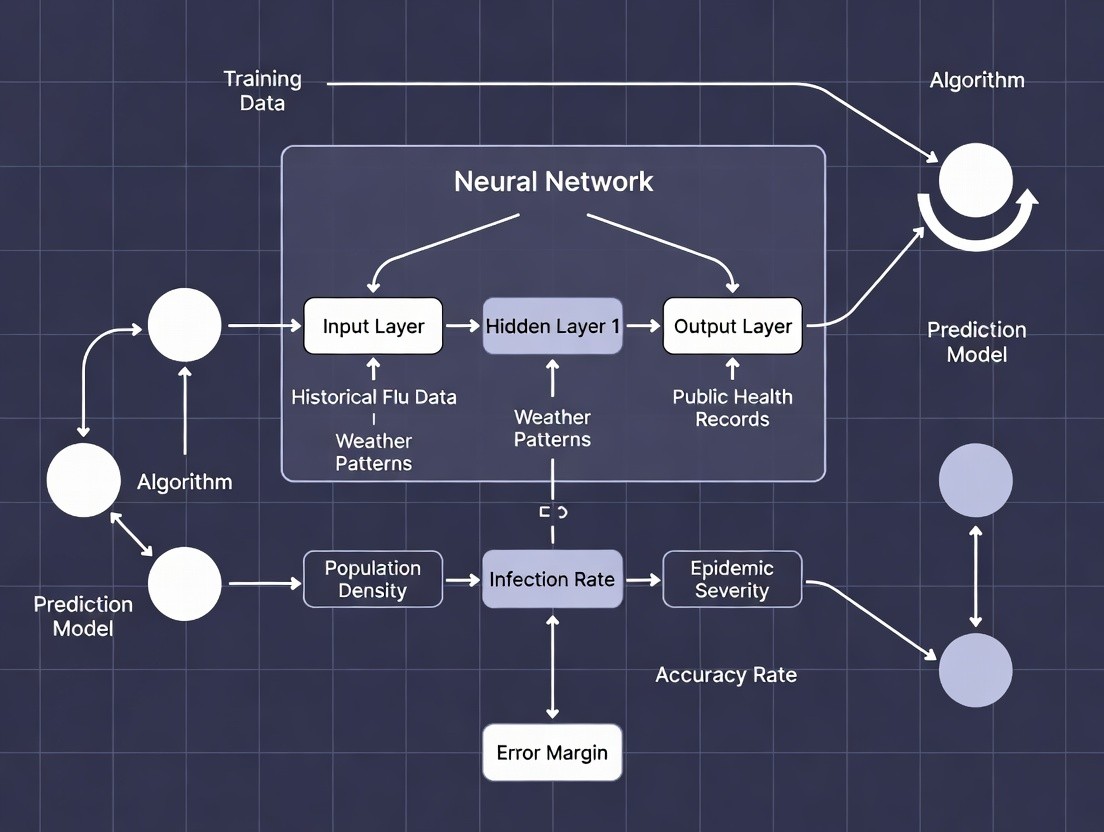
A neural network is a type of machine learning system designed to identify patterns in large amounts of data. In flu prediction models, the algorithm analyzes multiple types of information related to disease transmission. By examining these data sources simultaneously, the system learns how different factors interact to influence infection trends.
Once trained, the neural network can analyze current conditions and estimate whether a flu outbreak is likely to occur in the near future.
Main Data Sources Used for Prediction
- Hospital and clinic infection reports
- Pharmacy sales of flu medications
- Weather patterns such as temperature and humidity
- Population mobility and travel data
- Online search trends related to flu symptoms
Combining these datasets allows the system to detect early warning signals that may appear before official infection statistics increase.
The Role of Big Data in Health Forecasting
Modern neural network models depend heavily on big data. Health authorities collect vast amounts of information about disease cases, vaccination coverage, and hospital capacity. At the same time, digital technologies provide additional insights into public behavior.
For example, search engines and social media platforms often show increased activity related to flu symptoms when people begin experiencing illness. These digital signals can appear earlier than official medical reports.
By analyzing both traditional medical data and digital behavioral indicators, neural networks can identify subtle trends that signal the early stages of an epidemic.
Advantages of Early Flu Prediction
Predicting flu outbreaks two months in advance offers significant benefits for healthcare systems and communities. Early forecasts give authorities time to prepare hospitals, distribute vaccines, and inform the public about preventive measures.
- Improved preparation of hospital resources
- Better planning of vaccination campaigns
- Early public health warnings
- Reduced pressure on healthcare infrastructure
- More effective distribution of medical supplies
These preparations can help reduce the impact of large flu outbreaks and improve patient care during peak infection periods.
Applications in Public Health Planning
Health organizations can use AI-based predictions to make strategic decisions about disease prevention. For example, if a neural network forecast suggests that flu cases will rise significantly in a specific region, authorities may increase vaccination efforts in that area.
Hospitals may also use predictive models to adjust staffing levels, prepare additional patient beds, and ensure adequate supplies of antiviral medications.
Schools and workplaces could receive early warnings that encourage preventive measures such as hygiene campaigns or temporary adjustments to large gatherings.
Limitations and Challenges
Although neural networks can produce powerful predictions, they are not perfect. Disease transmission depends on many unpredictable factors, including new virus mutations and sudden changes in human behavior.
Data quality is also crucial for accurate forecasting. Incomplete or delayed reporting of infection cases can reduce the accuracy of predictions. Researchers must therefore continuously update models and incorporate new data sources.
Despite these challenges, AI systems have demonstrated significant potential for improving epidemic forecasting.
The Future of AI in Epidemiology
The use of artificial intelligence in epidemiology is expanding rapidly. Researchers are already developing systems capable of predicting outbreaks of other infectious diseases, including dengue fever, COVID-19, and respiratory infections.
Future models may integrate real-time health monitoring from wearable devices, environmental sensors, and global travel networks. These technologies could provide even earlier warnings of emerging health threats.
As machine learning methods continue to evolve, neural networks may become essential tools for public health organizations. By predicting flu epidemics months in advance, AI systems can help societies respond more effectively to seasonal diseases and protect communities from large-scale outbreaks.