In recent years, there has been a significant advancement in the field of Artificial Intelligence (AI) and Augmented Reality (AR). These technologies have become increasingly popular and have the potential to enhance virtual experiences in various fields such as gaming, education, healthcare, and...
Neural Network Restores Faded Tattoos Using Old Photographs
928
23.03.2026
The Challenge of Tattoo Fading
Tattoos are designed to last for many years, but over time their appearance can change significantly. Exposure to sunlight, natural aging of the skin, and the gradual spreading of pigment under the skin can cause tattoo designs to fade or lose their original sharpness. Colors may become dull, lines may blur, and details that were once clear can become difficult to recognize.
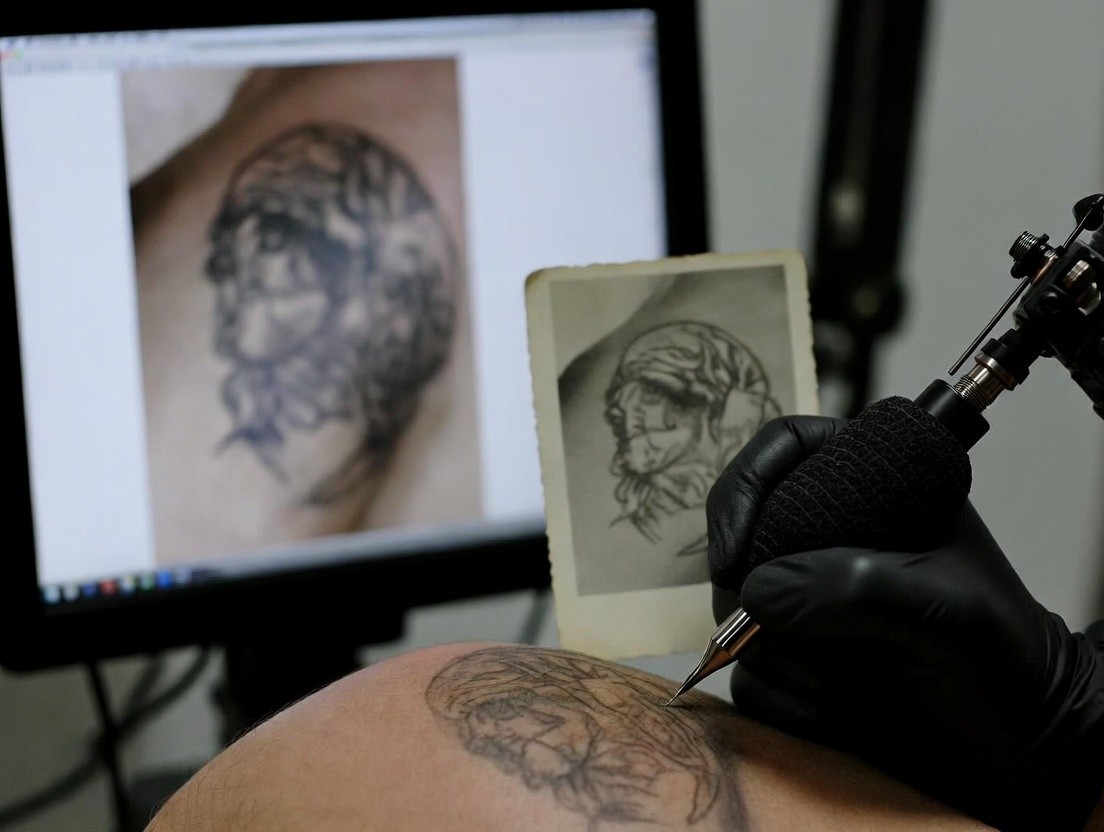
When people decide to restore an old tattoo, tattoo artists often face a difficult challenge. The original design may no longer be visible in full detail, making it hard to recreate the artwork accurately. In many cases, clients bring old photographs taken shortly after the tattoo was created to help artists understand how the design originally looked.
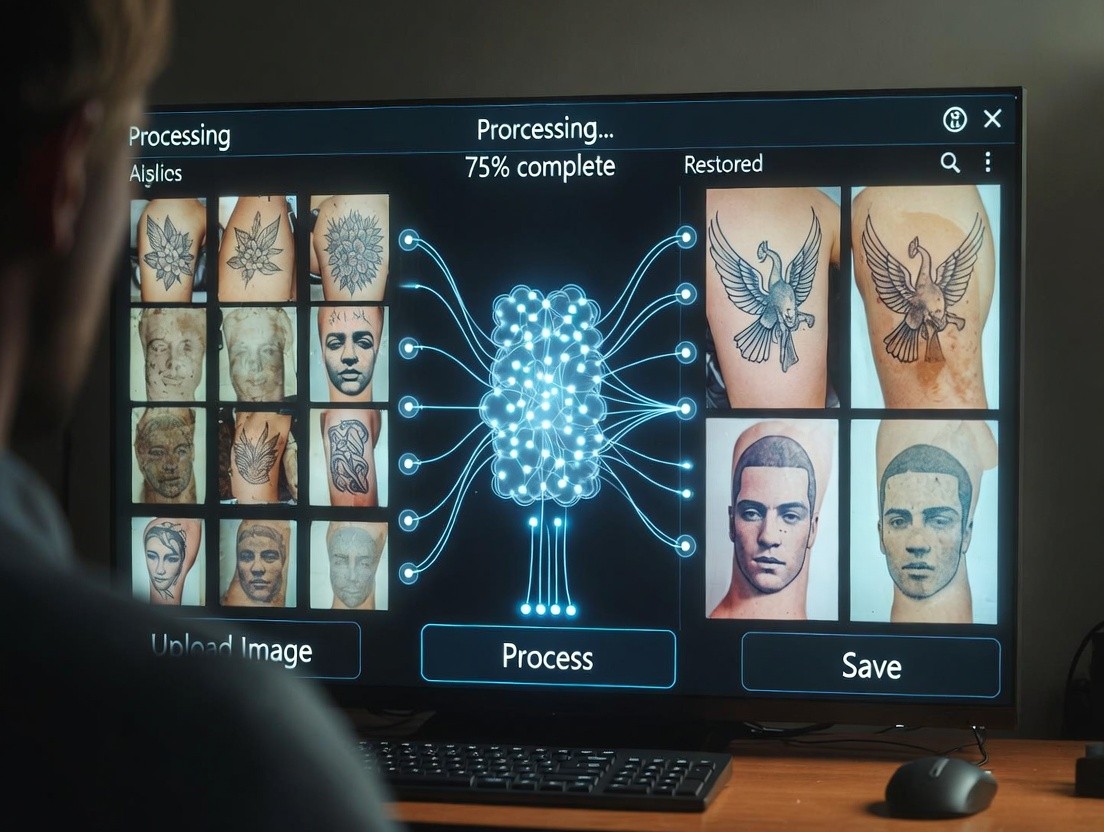
Recent developments in artificial intelligence are making this restoration process much easier. Neural networks can analyze old photographs and reconstruct a digital version of the tattoo that closely resembles its original appearance.
How Neural Networks Analyze Tattoo Images
The technology behind this restoration process is based on computer vision and deep learning. Neural networks are trained to recognize visual patterns in images, allowing them to analyze details such as line structure, color distribution, and shading.
When a user uploads an old photo of a tattoo, the AI system processes the image and attempts to reconstruct the design as it might have appeared when it was first created. The system identifies faded areas and predicts how the original shapes and colors were likely arranged.
Key Elements Analyzed by the System
- Line thickness and structure of the tattoo design
- Original color distribution in the artwork
- Shading patterns and gradients
- Symmetry and geometric relationships
- Image noise caused by photo quality or fading
By combining these elements, the neural network generates a reconstructed digital version of the tattoo design.
Training the AI Model
To achieve accurate results, the neural network must be trained using large datasets of tattoo images. Researchers collect thousands of photographs showing tattoos in both their original and aged states. By comparing these examples, the system learns how tattoo designs typically change over time.
Machine learning algorithms use this data to build models that predict how faded lines and colors originally appeared. The system becomes increasingly accurate as it processes more examples during training.
Types of Data Used for Training
- High-resolution photographs of newly created tattoos
- Images of the same tattoos years later
- Examples of different tattoo styles and techniques
- Color aging patterns caused by sun exposure
- Skin texture variations across different individuals
These datasets allow the neural network to understand how tattoos evolve over time and how their original form can be reconstructed.
Helping Tattoo Artists Restore Designs
The reconstructed images produced by the AI system can serve as valuable references for tattoo artists performing restoration work. Instead of guessing how a faded tattoo originally looked, artists can examine a digital reconstruction generated by the neural network.
This reference helps them redraw lines, restore shading, and reintroduce original colors more accurately.
- Clear visualization of the original design
- Improved precision during restoration sessions
- Reduced guesswork for tattoo artists
- Better communication between artist and client
- Higher satisfaction with restoration results
In some cases, artists may even modify the reconstructed design slightly to adapt it to the current condition of the skin.
Additional Applications of the Technology
Although the technology is primarily intended for tattoo restoration, it also has other potential applications. Digital reconstruction of faded artwork can be useful in fields such as art preservation, forensic analysis, and historical research.
For example, similar AI techniques could help restore damaged paintings, reconstruct ancient body art found in archaeological studies, or analyze visual details in old photographs.
These applications demonstrate how artificial intelligence can assist experts in recovering visual information that may have been partially lost over time.
The Future of AI in Personal Art Restoration
The use of neural networks in visual restoration is still evolving. Future systems may become even more advanced, capable of analyzing three-dimensional skin surfaces or predicting how restored tattoos will age in the future.
Some researchers are also exploring augmented reality tools that could project reconstructed designs onto the skin before restoration begins. This would allow clients and artists to preview the final result before any ink is applied.
As artificial intelligence continues to improve, technologies like neural network tattoo reconstruction may become common tools in creative industries. By analyzing old photographs and reconstructing original artwork, these systems help preserve personal artistic expression and ensure that meaningful designs can be restored with remarkable accuracy.