

In recent years, there has been a significant advancement in the field of Artificial Intelligence (AI) and Augmented Reality (AR). These technologies have become increasingly popular and have the potential to enhance virtual experiences in various fields such as gaming, education, healthcare, and...
Smart Ear Buds Translate Foreign Languages While People Talk
555
22.12.2025
Introduction to Real-Time Translation Technology
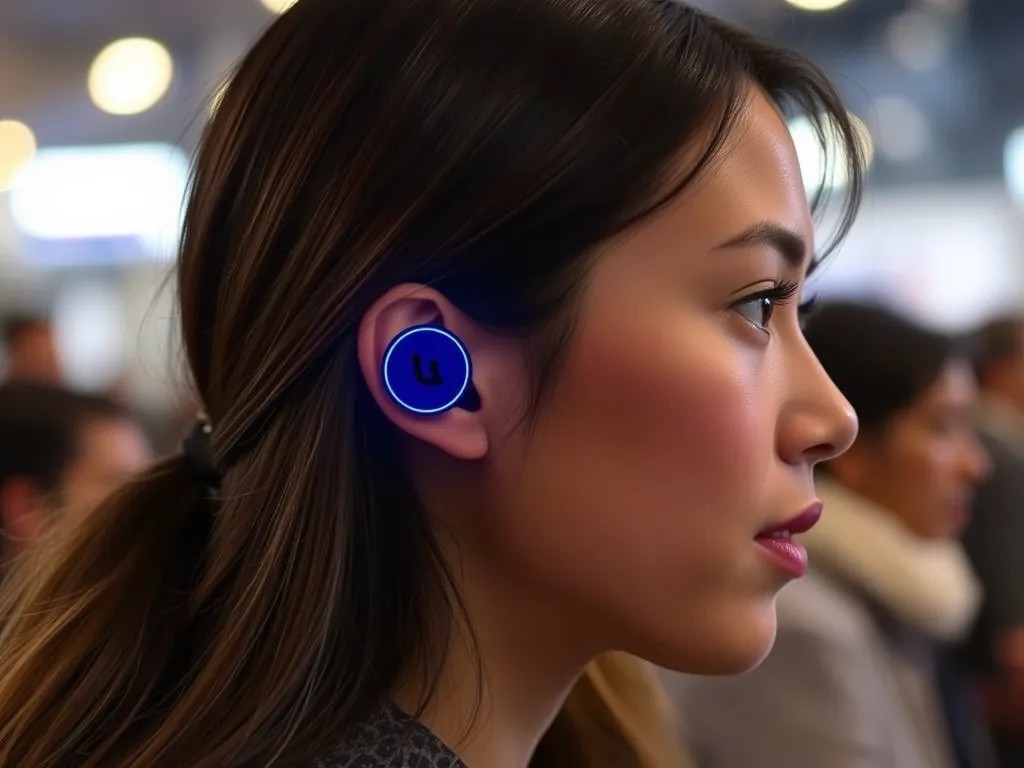
Language barriers have historically limited human connection and global communication, forcing people to rely on interpreters or struggle through phrase books when traveling or conducting international business. Smart earbuds with real-time translation capabilities are revolutionizing cross-language communication by providing instant, accurate translations directly into users' ears as conversations unfold. These devices combine advanced speech recognition, neural machine translation, and sophisticated audio processing to enable natural conversations between people speaking different languages, effectively making the world smaller and more connected.
How Translation Earbuds Work
The technology powering translation earbuds represents a convergence of multiple artificial intelligence systems working in perfect synchronization. Understanding this process reveals the remarkable engineering behind seemingly magical instant translation.
Speech Recognition and Processing
When someone speaks, the earbuds' built-in microphones capture the audio and immediately begin processing. Advanced speech recognition algorithms identify individual words, account for accents and dialects, and distinguish speech from background noise. This initial processing happens in milliseconds, ensuring minimal delay between speaking and translation.
The system also analyzes contextual clues including tone, emphasis, and sentence structure to better understand intended meaning. This contextual awareness helps prevent misunderstandings that might arise from literal word-for-word translations.
Neural Translation Engine
Once speech is recognized and transcribed, neural machine translation engines process the text. These AI systems have been trained on billions of translated sentences across numerous language pairs, enabling them to understand not just individual words but also idioms, cultural references, and complex grammatical structures.
Modern translation earbuds support extensive language libraries:
- Major global languages including Spanish, Mandarin, Arabic, and Hindi
- European languages such as French, German, Italian, and Portuguese
- Asian languages including Japanese, Korean, and Thai
- Less common languages and regional dialects
- Specialized vocabulary for business, medical, and technical contexts
Audio Synthesis and Delivery
After translation, text-to-speech technology converts translated text into natural-sounding audio. Advanced voice synthesis creates speech that maintains appropriate tone and emotional inflection, making translations sound more human and less robotic. The synthesized translation then plays directly into the user's ear with minimal delay, typically between one to three seconds after the original speech.

Practical Applications and Real-World Use
Translation earbuds serve diverse purposes across numerous scenarios, fundamentally changing how people interact across language boundaries. International travelers benefit enormously from this technology, navigating foreign countries with confidence when asking directions, ordering meals, or making hotel arrangements.
Business and Professional Settings
Global business communications have become more efficient and personal with translation earbuds. International meetings, negotiations, and conferences proceed more smoothly when participants can speak in their native languages while understanding everyone else perfectly. This technology eliminates the awkwardness of waiting for interpreters and reduces the risk of miscommunication in critical business discussions.
Educational and Cultural Exchange
Students studying abroad and cultural exchange programs utilize translation earbuds to facilitate learning and integration. Language students can practice conversational skills with native speakers while receiving real-time feedback and assistance. Museums and cultural sites increasingly recommend translation earbuds for tours, allowing visitors to enjoy exhibitions and historical information in their preferred language.
Technical Capabilities and Limitations
Current translation earbud technology achieves impressive accuracy rates, typically translating common phrases and standard conversations with 90-95% accuracy. However, performance varies depending on several factors including audio quality, speaker clarity, accent strength, and technical vocabulary complexity.
Challenges in Translation Accuracy
Certain situations present difficulties for translation algorithms. Heavy accents or rapid speech can reduce recognition accuracy. Background noise in crowded environments may interfere with microphone pickup. Highly technical or specialized vocabulary in fields like medicine, law, or engineering sometimes lacks sufficient training data for accurate translation.
Cultural idioms and colloquialisms pose particular challenges since direct translation often fails to convey intended meaning. While AI continues improving in this area, some expressions still translate awkwardly or require cultural context that machines struggle to provide.
Privacy and Security Considerations
Translation earbuds process sensitive conversational data, raising important privacy questions. Reputable manufacturers implement strong security measures including on-device processing that keeps conversations private rather than sending audio to external servers. End-to-end encryption protects any data transmission necessary for cloud-based features.
Users should review privacy policies carefully and understand whether conversations are recorded, stored, or used for improving translation algorithms. Some devices offer offline translation modes that eliminate internet connectivity requirements and associated privacy concerns.
Battery Life and Practical Constraints
Continuous real-time translation demands significant processing power, affecting battery performance. Most translation earbuds provide 4-8 hours of active translation time before requiring recharging. Carrying cases with built-in batteries extend usage to 24-30 hours total, sufficient for full-day travel or extended business meetings.
Future Developments in Translation Technology
Ongoing research promises substantial improvements in translation accuracy, speed, and naturalness. Emerging AI models better understand context, emotion, and cultural nuances, leading to translations that capture subtle meanings and maintain conversational tone more effectively.
Future earbuds may incorporate augmented reality features that display translated text visually while simultaneously providing audio translation. Expanded vocabulary databases will improve technical and specialized translation. Advanced noise cancellation will enable clear translation even in extremely loud environments.
Conclusion
Smart translation earbuds represent a significant technological breakthrough in global communication. By providing instant, accurate translations during natural conversations, these devices eliminate traditional language barriers and enable meaningful connections between people worldwide. While current technology has limitations, rapid improvements continue expanding capabilities and accessibility, bringing us closer to a world where language differences no longer prevent understanding and cooperation.