In recent years, there has been a significant advancement in the field of Artificial Intelligence (AI) and Augmented Reality (AR). These technologies have become increasingly popular and have the potential to enhance virtual experiences in various fields such as gaming, education, healthcare, and...
Software Creates Subtitles for Silent Films by Analyzing Lip Movements
873
21.03.2026
Reviving the Era of Silent Cinema
Silent films represent one of the earliest and most influential periods in the history of cinema. Produced primarily during the late nineteenth and early twentieth centuries, these films relied heavily on visual storytelling, expressive acting, and occasional text cards to convey dialogue. Because synchronized sound technology had not yet been developed, audiences interpreted conversations through gestures and context.
Today, many silent films remain important cultural artifacts. However, understanding the exact dialogue spoken by actors during filming has always been difficult. In many cases, scripts were lost, and intertitles included only fragments of the original conversation. As a result, viewers may miss part of the narrative that filmmakers originally intended.
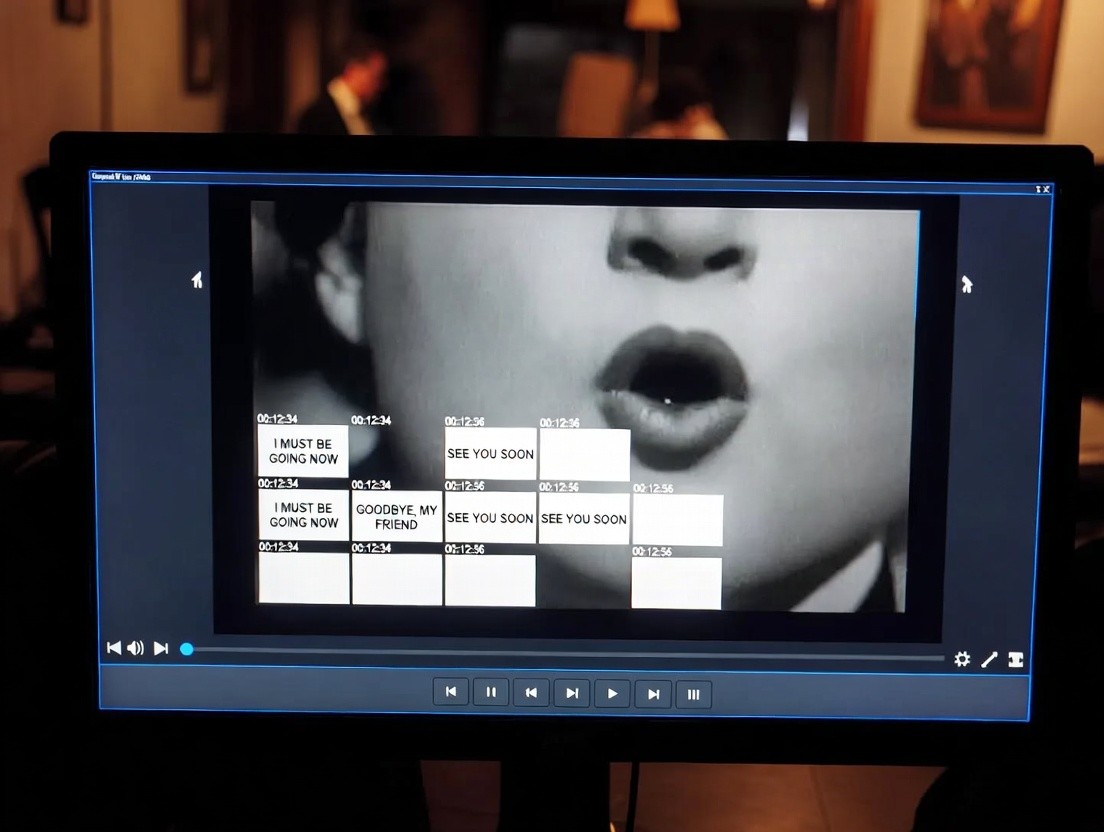
Modern technology is offering a new solution to this problem. Researchers have developed artificial intelligence programs capable of analyzing lip movements in silent films and generating subtitles that approximate the original dialogue.
How Lip Reading Technology Works
The core of this technology is an AI system trained to interpret human lip movements. Similar to speech recognition systems that analyze audio signals, lip reading algorithms study the visual patterns produced when people form words with their mouths.
Using computer vision techniques, the program identifies the position of the lips, jaw, and facial muscles in each frame of a video. These movements are then compared with large datasets containing examples of spoken language and corresponding mouth shapes.
Main Steps in AI Lip Reading
- Detect faces and track mouth regions in film frames
- Analyze lip movements frame by frame
- Convert visual patterns into phonetic predictions
- Combine predicted sounds into possible words
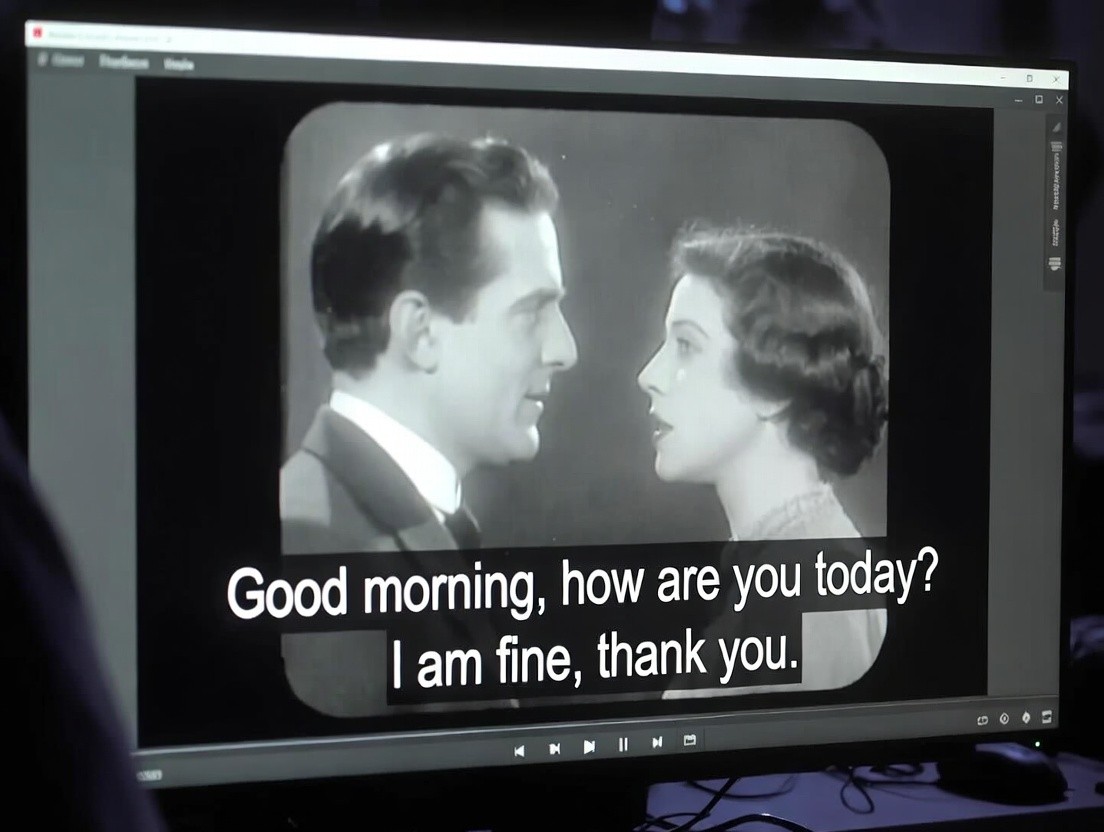
- Generate subtitles based on the most likely dialogue
This process allows the system to estimate what actors may have been saying even when no audio recording exists.
Training the Neural Network
For the system to interpret lip movements accurately, it must be trained on extensive video datasets. Researchers use thousands of recordings of people speaking in various languages while the AI learns how mouth shapes correspond to different sounds.
Machine learning techniques allow the neural network to gradually improve its accuracy. By analyzing many examples of speech, the system becomes better at distinguishing subtle differences between similar lip movements.
Types of Data Used in Training
- High-resolution videos of spoken conversations
- Annotated datasets linking mouth movements to phonemes
- Language dictionaries and grammar models
- Film restoration archives containing historical footage
- Contextual language prediction systems
Combining visual analysis with linguistic models helps the AI reconstruct sentences more accurately.
Challenges of Analyzing Silent Films
Although the technology is promising, silent film analysis presents unique challenges. Early films often have lower image quality than modern video recordings. Lighting conditions, camera angles, and film degradation may make it difficult for algorithms to clearly detect facial movements.
Actors in silent films also used exaggerated facial expressions and stylized acting techniques that may differ from modern speech patterns. This theatrical style can sometimes make lip reading more complicated for automated systems.
To overcome these difficulties, researchers combine AI predictions with historical research. Film historians may review generated subtitles and compare them with available scripts or production notes to verify accuracy.
Benefits for Film Preservation
AI-generated subtitles provide several advantages for preserving and studying historical films. By reconstructing missing dialogue, researchers can gain a deeper understanding of how early filmmakers structured their narratives.
Subtitles also make silent films more accessible to modern audiences who may be unfamiliar with traditional intertitle storytelling.
- Improved understanding of historical film narratives
- Enhanced accessibility for international audiences
- Support for film restoration projects
- Educational use in film history studies
- Preservation of cultural heritage
These tools allow historians and archivists to bring early cinema closer to its original form.
The Future of AI in Film Restoration
Artificial intelligence is rapidly becoming an important tool in film preservation and restoration. In addition to lip reading technology, AI systems are already being used to repair damaged film frames, enhance image resolution, and restore faded colors.
Future developments may allow AI to reconstruct entire soundtracks for silent films, combining lip reading results with historical sound libraries and voice synthesis technology. This could create fully synchronized audio versions of films that were originally produced without sound.
While such reconstructions would remain interpretations rather than exact replicas, they could offer audiences a richer experience of early cinema.
By analyzing lip movements and generating subtitles, modern AI technology is helping researchers unlock hidden dialogue from silent films. This innovative approach bridges the gap between historical filmmaking and modern digital technology, ensuring that classic cinema continues to be understood and appreciated by future generations.